CSC Chaplains in the News
A Tip for Viewing this Page: If any of our content - especially videos - does not load correctly, please do a hard refresh of your broswer. Unsure how to do this? Click [HERE] for easy instructions.
| RETURN TO TOP | |
Know Your Neighbor: | |
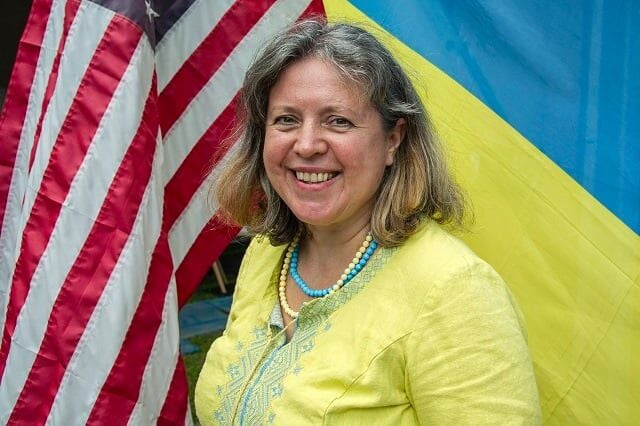
| Originally published on https://www.decaturish.com on May 18, 2025|Updated Jun 13, 2025 By Dan Whisenhunt Editor's Note: Chaplain Olga Westfall is a CSC Chaplain | |
| |
|
Editor’s Note: This story deals with suicide. If you or someone you know is in a crisis or are seeking help, call or text the Suicide and Crisis Hotline at 988. Or call the Georgia Crisis and Access Line (GCAL) at 1-800-715-4225. If you need additional resources, the National Alliance on Mental Illness and the Georgia Department of Behavioral Health and Developmental Disabilities have additional information. GREATER DECATUR, Ga. – In 1989, Olga Westfall lived in Eastern Ukraine. The Soviet Union was on the verge of collapse, and so was her life. She was 21, spent much of her childhood caring for a disabled mother, and she was searching for answers in what she called an "ungodly" country. Westfall did not want to live like her mother, alone and suffering. She searched for answers in the library, where the Bible was prohibited. Her search led her to a fortune teller who stole her money. When she walked into a Pentecostal church service in Ukraine in 1989, she was ready to die. The Soviets always told her that Christians invited people to church services so they could be sacrificed to God. "And I was thinking to myself, well, even if they kill me, you know, I was ready to die anyway," Westfall said. "I just will ask them to make it quick." Olga Westfall did not die in 1989. She found God, taught herself English and came to the U.S. in the late 1990s. She attended seminary school in the U.S and served as a chaplain in the Army before joining the Air Force. "I think it kind of showed that God has a sense of humor," Westfall said, smiling. "A woman from the former Soviet Union became a chaplain in the United States Army, leading American soldiers under God." She’s currently in the Air Force Reserves, and her full-time job is as a chaplain at the Atlanta VA Hospital, not far from where she resides in Greater Decatur. An on-call schedule for chaplains is taped to the wall in her small office. A Protestant, she occasionally fills in for other religions when there are no chaplains of that faith available. Here, Westfall can help people, particularly veterans on the psychiatric floor, who think life is no longer worth living. "It gives me satisfaction to be in this job," she said. 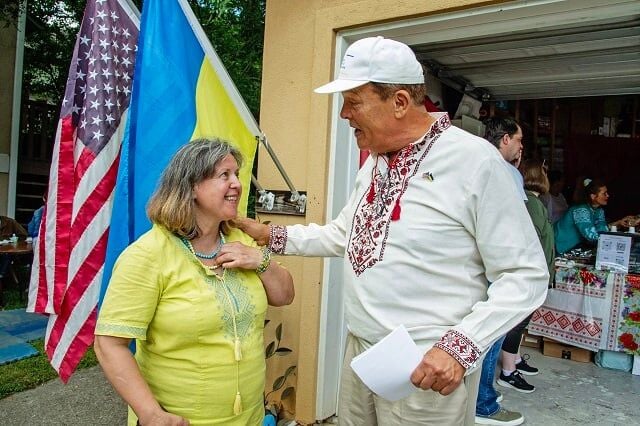
Westfall hasn’t forgotten Ukraine, which has been fighting Russia since 2014, a conflict that escalated in 2022. She’s been raising awareness and funds for Ukraine’s war effort. Westfall makes and sells art and organizes fundraisers, like the Taste of Ukraine event held at her home May 4. While she doesn’t have an exact figure for how much she’s raised, she said, "It’s a good sum of money." Emory Morsberger, who founded the nonprofit helpingukraine.us, said Westfall and other Ukrainians living in Atlanta have raised about $100,000 for his organization and have helped other organizations, too. The funds raised at the May 4 fundraiser went toward medical equipment and "to support the defenders." "They never stop," Morsberger said. "They lead the charge and people follow." Westfall met her husband, Clay, when she was in the seminary at Regent University in Virginia and he was in the Navy. They went out for coffee and never stopped seeing each other after that. They have three sons, two adopted from Ukraine. He called his wife’s story "unbelievable." She didn’t talk about her childhood much when their relationship began. When her father died and Westfall traveled to Ukraine to claim his possessions, Clay saw pictures of her as a little girl. "She looked just so sad," Clay said. "The ladies in the town used to call her the girl with the sad face." 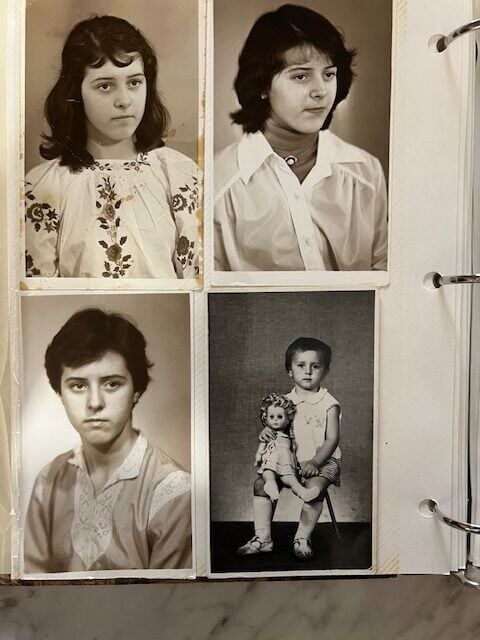
Westfall’s smiles come more easily now. She moves with purpose, helping veterans in two countries. Her family has hosted Ukrainian soldiers and chaplains in her home. "She’s always there with open arms, ready to help," Clay said. Olga Gorman and Karyna Busch, two Ukranian immigrants who helped Westfall with the May 4 fundraiser, said her experience as a veteran gives her a unique perspective on the conflict. "She has very strong faith," Busch said. "That faith gives her strength and that strength she spreads to us through her work, through her organizing all these events." Carol Johnstone, Westfall’s neighbor, described her as a resilient woman with a gentle spirit. "She’s a hero," Johnstone said. "She’s someone who represents women in any war who see injustice and can’t get out there and get a gun, but they’re going to do whatever they can to support the effort. There have been women like that throughout history, but I never met anyone who did that." Westfall reflects on the moment she decided to save her own life and turn it over to God. Saving others from making the mistake she almost made 36 years ago as a young woman in Ukraine has become part of her life’s work. "I wanted to be a message of hope that life is worth living," she said. "With God’s help, we can make it and we can encourage others and help where we can. That gives me satisfaction, meaning of life. I’m not just existing." Editor’s note: "Know Your Neighbor" tells the untold stories of interesting people who live in our community. To nominate someone for this feature, email decaturish@appenmedia.com |
|
| RETURN TO TOP | |
How Gritty Are You? | |
| Summer 2023 Editor's Note: Chaplain Janet Clarke is a CSC Chaplain currently assigned to the Coast Guard. | |
|
Chaplain's Corner, The Long Blue Line, Summer 2023 | |
| |
_Chaplains_Corner.jpg)
| RETURN TO TOP | |
CSC Chaplain Graduates with DMin. | |
| January 2022 Editor's Note: Rev. Dr. Joshua Ebhodaghe is a CSC-affiliated chaplain. | |
|
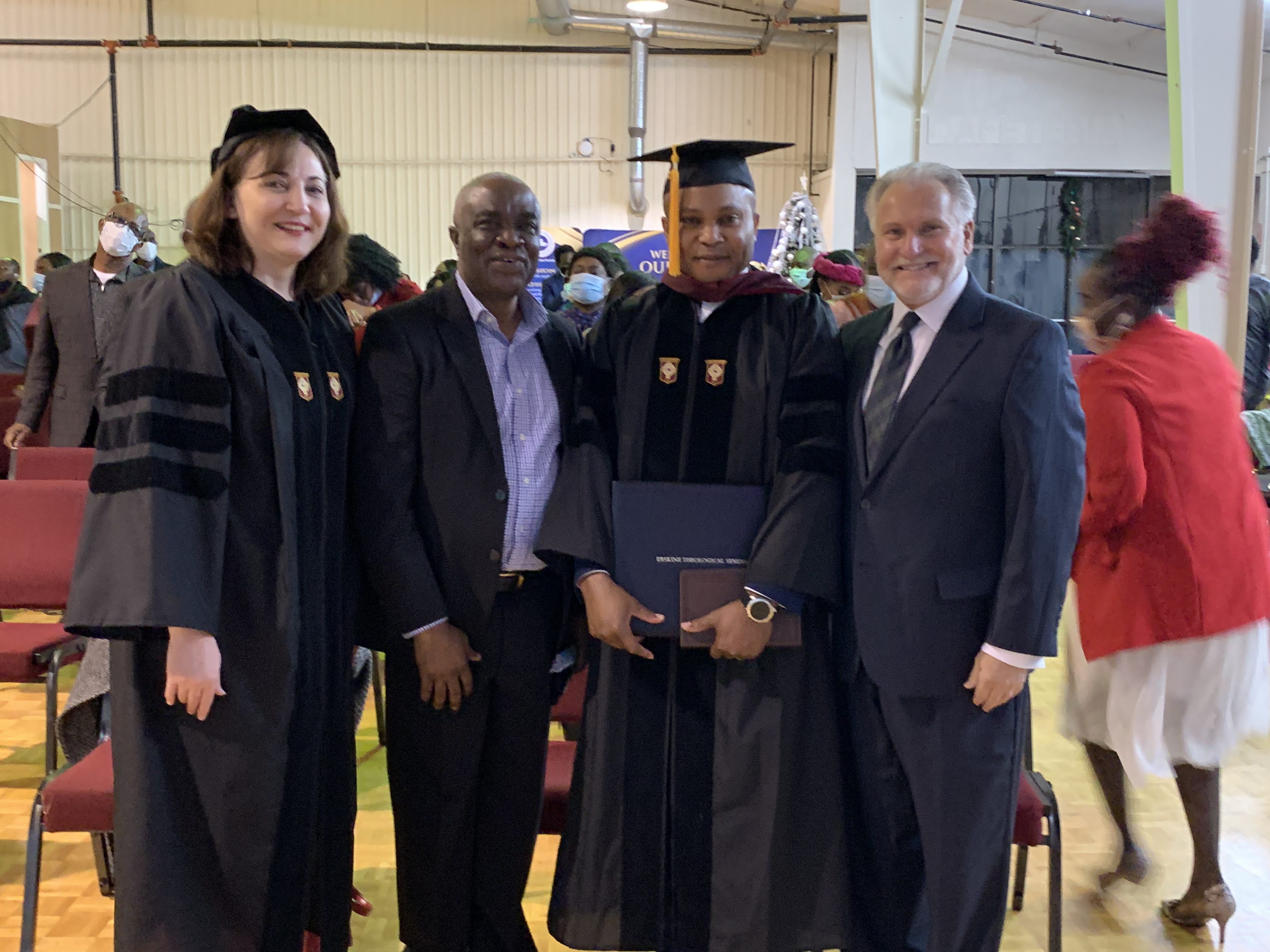
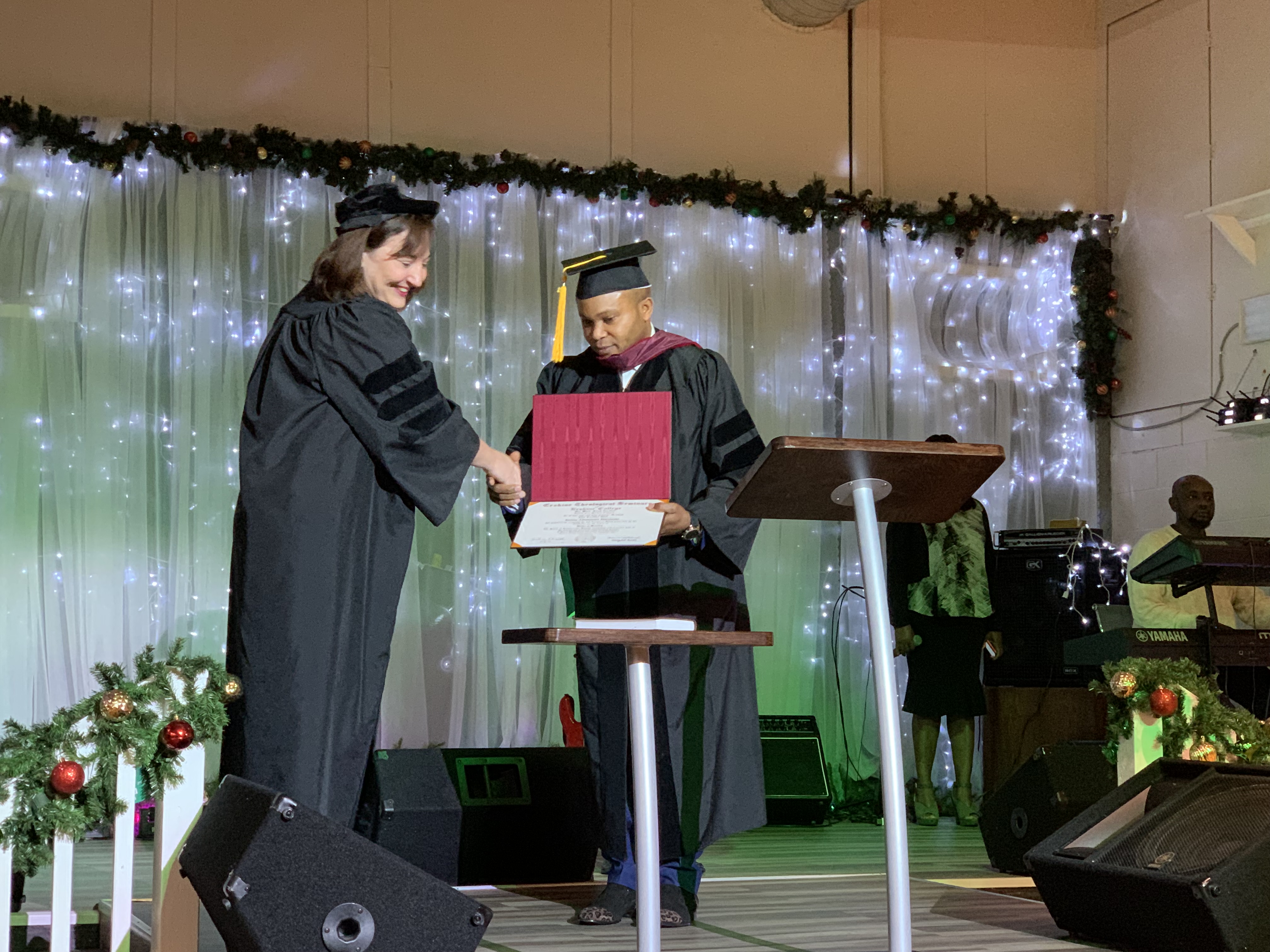
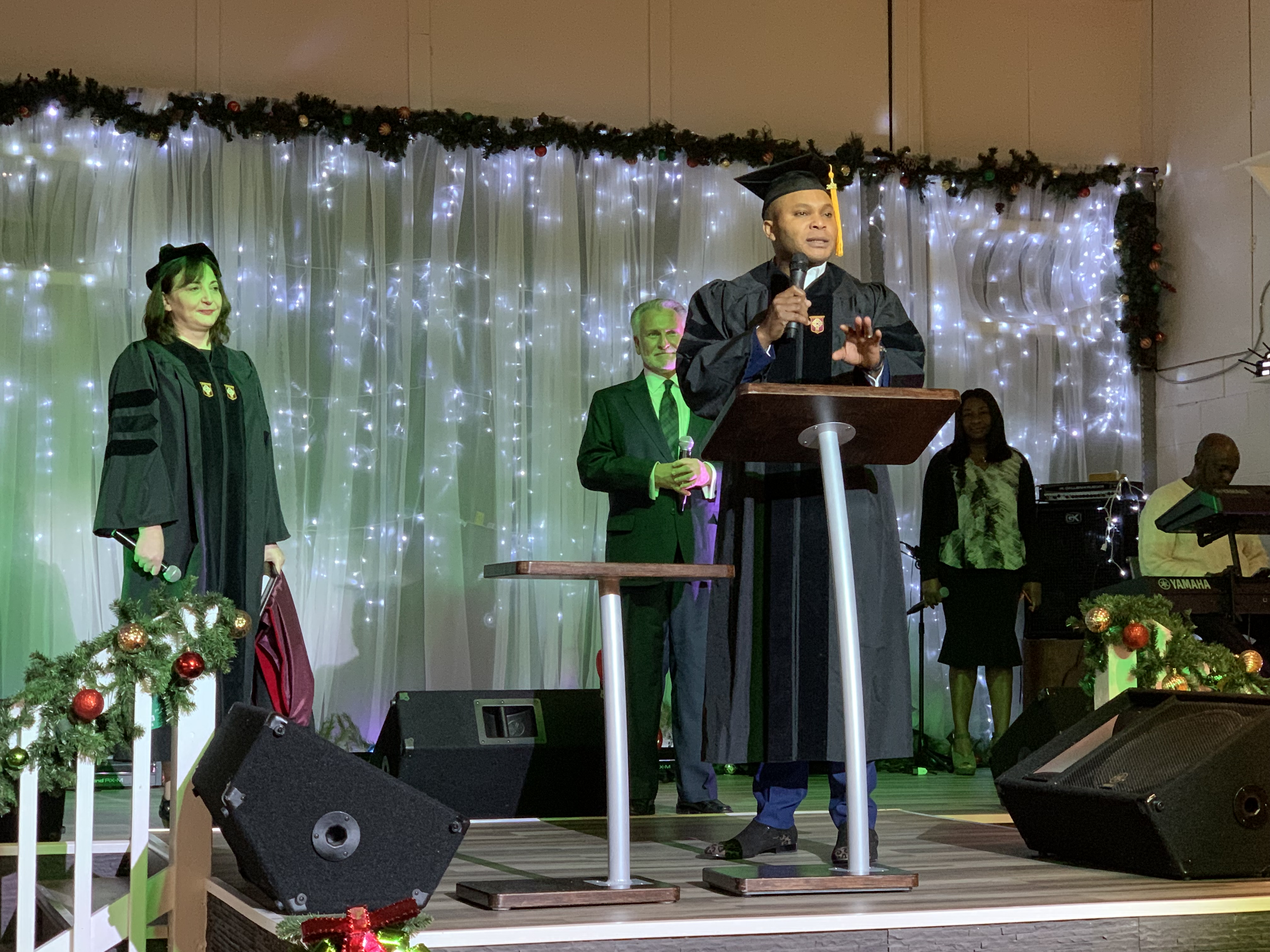
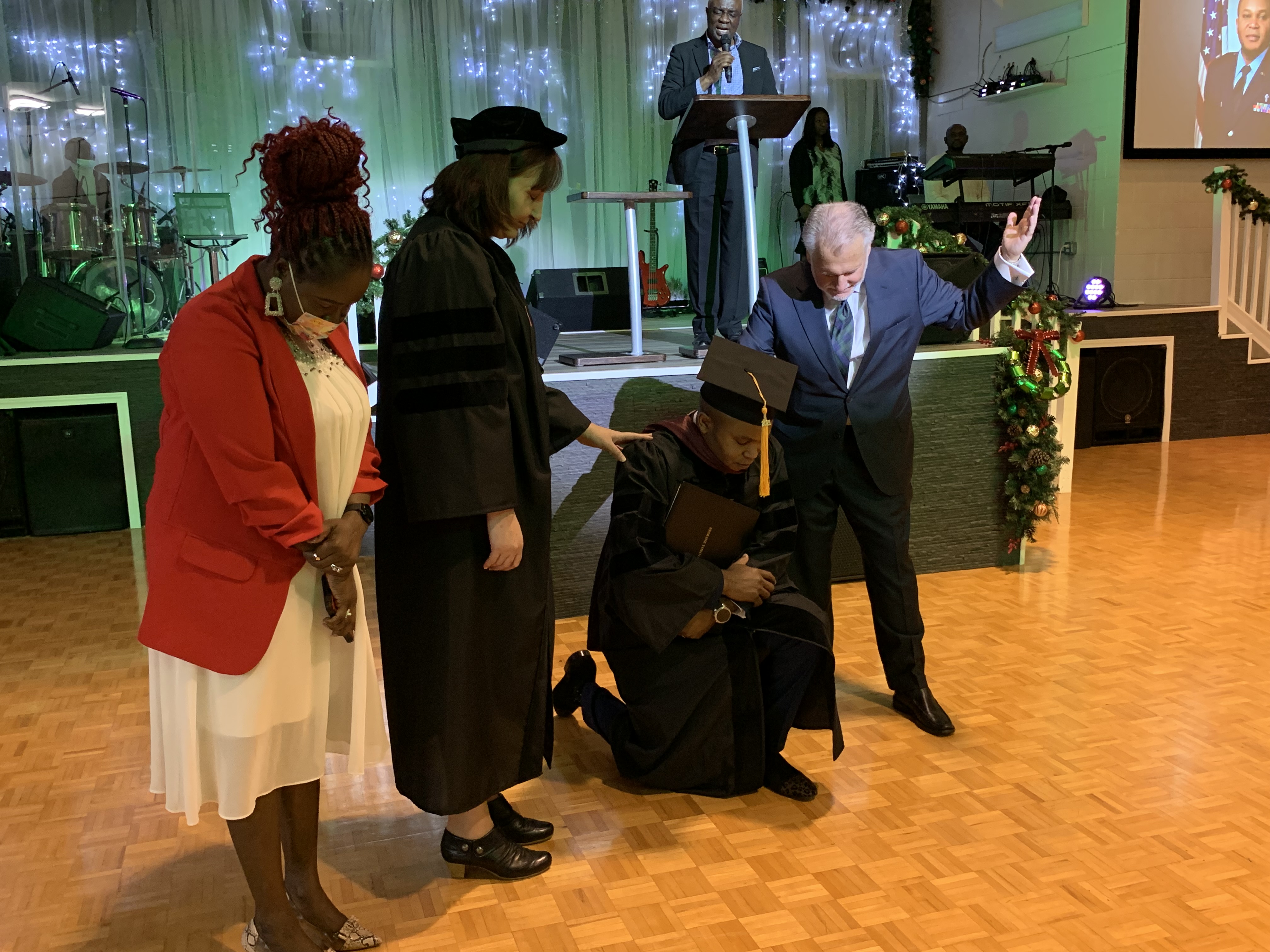
A Graduation Convocation for Rev. Dr. Joshua Ebhodaghe was held at The Redeemed Christian Church of God in Mout Zion, GA. Rev. Dr. Ebhodaghe was officially presented with his diploma and participated in the hooding ceremony. Rev. Dr. Ebhodaghe is a Erskine Seminary September DMin graduate. | |
 |  |
 |  |
| RETURN TO TOP |
Music for the Soul |
| Originally published on YouTube October 2021 Editor's Note: Chaplain Keah Humphrey is an active duty Army chaplain, and is one of the stars in this video. |
| RETURN TO TOP |
CSC Chaplain Receives 2021 MCA Distinguished Service Award |
| August 2021 Editor's Note: Chaplain (Maj.) Bill Kim is a CSC Chaplain |
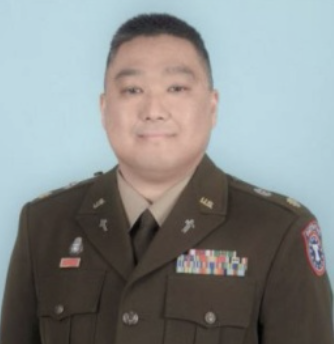
Chaplain Bill Kim is the Army’s 2021 MCA Army active component Distinguished Chaplain and has been serving as the Chaplain for the 2nd Recruiting Brigade, Redstone Arsenal, Alabama since 2020. He is endorsed by The Coalition of Spirit Filled Churches. He graduated from the University of Massachusetts Amherst in 2002 with a BA/BS in Communications and Media and was commissioned as a Second Lieutenant via the Amherst Army ROTC program as a Military Intelligence Officer. He then graduated from Duke Divinity School with a MDiv in 2006 and has been serving as a chaplain since that time. Among his overseas assignments are deployments to Kuwait, Jordan and Iraq, and even with his deployments he is a recipient of the Military Outstanding Volunteer Service Medal, a clear indication of his commitment to not just serving the Soldiers, Families and Civilians of the 2nd Recruiting Brigade, but also to those he serves in his free time when off duty. |
| RETURN TO TOP |
CSC Chaplain organizes ceremony to honor 97-year-old WWII Veteran |
| Originally published by WIS News 08 JULY 2020 by WIS News 10 Staff Editor's Note: Chaplain, Lt Col, Brian Bohlman is a CSC Air Guard chaplain. |
|
COLUMBIA, S.C. (WIS) - On Wednesday, military officials gathered to honor 97-year-old David Hubbard for inspiring hundreds of servicemembers during the COVID-19 pandemic. Hubbard, a master craftsman and veteran who served during the Battle of the Bulge, was recognized during a special ceremony at his home in Columbia after he made and donated more than 500 crosses to be distributed to members of the Armed Forces. "These crosses represent emblems of hope," said NSAG Deputy Commander Tim Kosiba. The ceremony was attended by active-duty Army and Air Force military commanders who presented David with several gifts. As a servicemember, David held security clearance above Top Secret and his unit was critical to communications for Operation Overlord (D-Day). |
| RETURN TO TOP |
Navy chaplain addresses this era of our nation’s unrest. |
| Originally published by The Naval District Washington (NDW) Facebook Page 12 JUNE 2020 Editor's Note: Chaplain, Lt, Takana Jefferson is a CSC chaplain. |
|
Active duty Navy chaplain Takana Jefferson shares from her heart from the Lincoln Porch of Washington Navy Yard. She addresses this era of our nation’s unrest.
|
| RETURN TO TOP |
Day in the Deid: Religious Support Team |
| Originally published by 379th Air Expeditionary Wing's Facebook Page 29 MARCH 2020 Editor's Note: Chaplain, CAPT, Greg Redden is a deployed Air Force chaplain with The Coalition. |
|
|
| RETURN TO TOP |
Former WWII Veteran Clara Green Honored, Laid To Rest |
| Originally published by CBS MIAMI 06 MARCH 2020 Editor's Note: Chaplain Hayley Moffatt is an active duty CSC Navy chaplain, assigned to the Coast Guard in Miami |
|
MIAMI (CBSMiami) – Clara Green, a US Coast Guard World War II veteran, was honored in a final farewell in Doral. Green, who recently passed away at the age of 94, paved the way for women who serve in the Coast Guard. "I want to thank you all for being here today and appreciate all the kind words of condolences about the passing of a mother, grandmother, and great-grandmother," said a family member. Green’s family believes she may have been the last female Coast Guard veteran of this World War II generation. |
| RETURN TO TOP |
Full-time psychological health support available to VaARNG |
| Originally published by Virginia National Guard FEBRUARY 21, 2020 by Maj. Jenny Hartsock Editor's Note: Army Guard Chaplain Jonathan Goldwire is a CSC chaplain |
|
RICHMOND, Va. – The Virginia Army National Guard increased the level of mental health support services it offers in August 2019 with the addition of a full-time director of psychological health. In that role, Jonathan Goldwire, a licensed master social worker, strives to extend mental health support to the VaARNG community by offering an array of services while also acting as a liaison between service members and mental healthcare providers, chaplains and other health care providers in the community. "Soldiers face common stressors related to difficulties paying bills, we experience disruptive life events like divorces and loss of employment, and we encounter unexpected traumas in life like losing a loved one," said Goldwire. "Yet despite all of this, Soldiers are expected to maintain a state of readiness and vigilance at home and while deployed. So, when faced with all of these different things that life throws at you, the most meaningful and impactful areas in which I can help is by helping Soldiers gain access to resources to help them face these issues." Goldwire, a Citizen-Soldier himself, knows intimately the unique challenges National Guard members face and he desires to ensure that all members of our force are aware of the services that are available to them. He takes the information provided by a Soldier, then helps the find the best professionals in their community that can help them address what they are facing. "The entire process is a team effort, and it empowers the individual to take ownership of their mental health," Goldwire said. Goldwire works to ensure that psychological health for service members and their families throughout the VaARNG is effectively addressed. He is passionate about providing education that reduces stigma, confronting misperceptions about seeking mental health treatment, and encouraging and normalizing treatment of issues involving mental health. "Our Virginia National Guard team of Soldiers and Airmen, members of the Defense Force, state and federal civilians and family members are facing some of the toughest demands on their personal and professional lives in recent memory, but they are rising to the challenge and maintaining incredible levels of readiness and resilience," said Maj. Gen. Timothy P. Williams, the Adjutant General of Virginia. "At some point our personnel and their families may face stressors that may impact their health, happiness and readiness. If you are struggling, hurting or find yourself in need of support, there are resources available to help. Resiliency, wellness and fitness strategies and training are continuously improved through our collaboration with medical, behavioral health service providers and community stakeholders who are committed to assisting our team members." Williams also stressed that seeking resources or assistance is not a sign of weakness, and teams are stronger if they build bonds of trust. "Leaders at every level need to foster an environment where their service members feel safe to reach out and ask for assistance if they need it," Williams aid. "It also is important to not wait until there is some sort of crisis or traumatic event, but be proactive and reach out for support to work through everyday challenges." Goldwire provides intervention and care coordination, clinical case management, consultation to commanders and leaders at all levels, resiliency promotion, and he is a link to community-based resources. He can also provide one on one clinical care and support, short term counseling on common issues such as couples conflict, anger management, work place stressors, and communication when necessary. "The number of resources available to guardsman throughout Virginia are vast," said Goldwire. "I have had the opportunity to meet and connect with a number of community-based providers from the rural areas of western Virginia, to the densely-populated communities that make up Northern Virginia, to those who enjoy the shorelines and beaches to the east and everywhere in between. There are state, federal, for-profit, non-profit, volunteer, and fee-for-service agencies that specialize in helping service members and they are able, willing and waiting to provide support to service members in the National Guard." Although Goldwire rotates between Fort Pickett and the Virginia National Guard Sgt. Bob Slaughter Headquarters at Defense Supply Center Richmond, Virginia, he travels throughout the state and is easily accessible to Soldiers over the phone. He encourages any Soldier who wishes to connect to do so directly with him. He also encourages family members of our Soldiers to call him on behalf of their Soldier, when necessary. "I love what I have been called to do, and that is to serve Soldiers," said Goldwire. "Seeking mental health support has shifted in a more positive manner, and I want to help as many people as I can while I can." Goldwire can be contacted at cell 434-480-6463 or email at jonathan.goldwire.mil@mail.mil. Full list of Readiness and Resiliency Resources: http://go.usa.gov/xdd9F Additional resources for assistance:
|
| RETURN TO TOP |
My 18 Year BCC Journey as a Military Chaplain |
| Originally published by Association of Professional Chaplains OCTOBER 2019 by Lt Col Brian Bohlman BCC, Air National Guard Editor's Note: Lt Col Brian Bohlman is a CSC Chaplain |
|
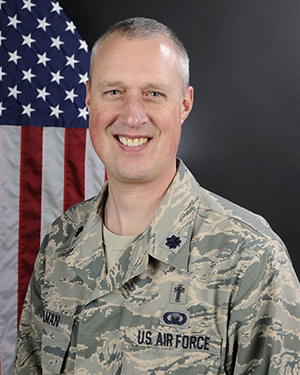
After graduating with my M.Div. in August 2000, I immediately entered a one-year, four-unit CPE residency at a large community hospital with a Level 1 trauma center. As a new CPE student and hospital chaplain intern, I enjoyed learning new ministry skills that were not part of my seminary degree program, such as pastoral formation, pastoral competence, and pastoral reflection. In the middle of my third unit, I had to withdraw from my residency to attend mandatory military chaplain training to become a fully qualified Air Force Chaplain. Within a few months after graduating from the Air Force Basic Chaplain Course, my entire life changed on September 11, 2001, when I was placed on active duty to support military operations at home and abroad. After five deployments over 17 years--two in military trauma hospitals--I had a deep longing to return to CPE and reflect on ministering to broken service members and their families. The cost of caring for thousands our nation’s wounded warriors--coupled with my own lack of personal and spiritual self-care--resulted in compassion fatigue and post-traumatic stress. While CPE was one outlet to help process some of my pain and brokenness, my active duty military schedule didn’t allow me to complete resident CPE in the traditional form in a hospital setting. Just as I was about to give up on returning to CPE, I learned about an ACPE accredited distance-learning program (Centered Life) in Colorado run by ACPE Certified Educator, Rev. Pam Roberts, who specializes in equine facilitated learning experiences with military veterans. Pam uses horses to help CPE students learn how to manage their emotions while caring for others. Her five horses helped teach me about pastoral authority, leadership, and use of self in negotiating caring relationships. So, after a 16-year lapse in CPE units, I began my third (extended) unit in the summer of 2017 and completed my fourth (extended) unit at the end of February 2018. The culmination of my 18 year journey resulted in becoming a Board Certified Chaplain with the Association of Professional Chaplains in March 2019. I hope my journey encourages those currently "in the trenches" of CPE with the goal of becoming board certified. Just remember to "trust the process" and you will be fine. I want to thank the following mentors who encouraged me over this 18-year journey: Pam Roberts, Carolyn Barksdale, David Plummer, Jan McCormack, Dave DeDonato, Dallas Little, and Stan Campbell. Without their support and encouragement over the years, I would not have continued my CPE journey to become a Board Certified Chaplain. I would also encourage military chaplains to consider enrolling in a distance-learning or extended unit CPE program for professional development and self-care. CPE provides an excellent forum and opportunity to reflect and process the unique stressors of military service. No matter how long it has been since completing your last unit of CPE, it is never too late to continue the journey. Godspeed! -------------------------- Brian Bohlman, DMin, BCC currently serves as a Chaplain (Lt Col) in the Air National Guard and on the National Board of Directors of the Military Chaplains Association of the USA. |
| RETURN TO TOP |
CSC Chaplain amoung 8 Deployed After San Diego Naval Hospital Residency |
| Originally published by Times of San Diego 27 AUGUST 2019 by Debbie L. Sklar Editor's Note: LT James "Jiho" Kim is a CSC Chaplain |
|
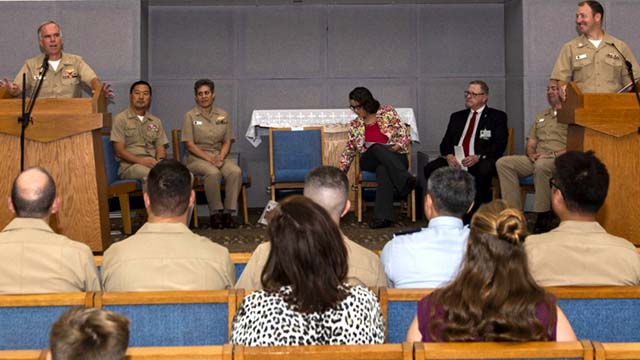
Eight Navy chaplains have graduated from a year-long program at Naval Medical Center San Diego meant to prepare ministers to provide spiritual support and counseling in hospital settings. Ceremonies were held Friday for the Class of 2019 clinical pastoral educational residency program. The graduate course consisting of four quarters of theory and applied practice in pastoral care. Their commitment is to serve for three years after completing the program. Four chaplains are headed to VA clinics around the country, and four active duty Navy chaplains are heading to deployable units, Naval hospitals and bases. Capt. Bradford Smith, commanding officer of NMCSD, spoke to the graduates about their hard work and the importance of their roles. "The chaplains are critical to what we do and critical to the spiritual health of all who serve, integrating the physical needs with social needs and also spiritual needs," Smith said. "If we are going to have a medically ready force, they have to have all of those needs met, and what you have been studying and what you are going to be able to deliver is exactly that." During the program the residents spent three days a week in a ward interacting with patients and providing spiritual support. The other two days of the work week were spent in reflection groups in order to get feedback amongst colleagues to improve the care they provided. The program is designed to prepare ministers to provide service members and their families resources in times of need, and to give spiritual support and counseling. "I think one of the best things of this program is it really forms you to be as present as you can be with people," said graduate Lt. Cmdr. Kevin Wilkinson. "The fleet, hospitals and everywhere we go, this helps us to care for people in the most meaningful way." In the four-quarter school year, all residents were required to complete more than 400 hours of structured group instruction, and more than 1,200 hours of clinical practice in the wards of NMCSD and other hospitals in the Southern California area. They also were required to present their clinical works, conduct a quarterly self-evaluation, and complete a final evidence-based project. Formed in 1984, with the first class graduating in 1985, the Hampton Roads Clinic Pastoral Education Center united the efforts of the Navy Chaplain Corps and the National Veterans Affairs Chaplain Center to provide certified CPE for selected Navy chaplains. The program is accredited by the Association for Clinical Pastoral Education. |
| RETURN TO TOP |
CSC Chaplain Participates in 75th anniversary of Operation Dragoon |
| Originally published by DVIDS 16 AUGUST 2019 Video by Petty Officer 2nd Class Sean Castellano Regional Media Center (RMC) Europe & AFN Europe Editor's Note: Lt Col John Bailey is a CSC Chaplain |
|
Rhone American Cemetery in Draguignan, France held a memorial ceremony, in honor of the 75th anniversary of Operation Dragoon, August 16th. CSC Chaplain (Lt. Col.) John Bailey participated in this very special observance. |
| RETURN TO TOP |
CSC Chaplain Receives Board Certification |
| Originally published in Military Chaplains Association Weekly Newsgram, 26 June 2019 Editor's Note: Brian Bohlman is a CSC Air Guard Chaplain |
|
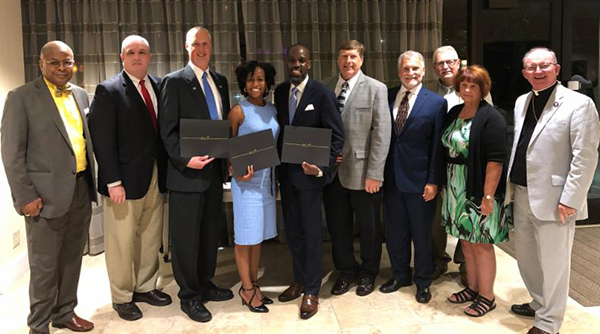
Congratulations to CSC Chaplain, Lt Col, Brian Bohlman, USANG, for receiving board certification June 22 at The Association of Professional Chaplains annual meeting in Orlando. He is pictured along with other chaplains attending the conference who are also members of the Military Chaplains Association.
Executive Director Notes What a remarkable time a number of us in MCA had this past weekend: Twelve of us were at the Association of Professional Chaplains Conference in Orlando, Florida, and while there we were able to celebrate three new Board Certified Chaplains (BCC) cross the stage to receive their BCC certificates,: Chaplain Brian Bohlman, Air National Guard, Chaplain Drea Gilkey, Navy, and Chaplain Rone-iff Carr, Air Force (see the group photo of us with these three brand new chaplains right in the middle of the photo). Also recognized at the Awards Dinner was Chaplain Kent Lundy, Indiana Air National Guard, who has become the first chaplain to be certified as an advance practice military chaplain, which is noted as BCC-MC. It is our hope that Kent will be able to be with us at our National Institute to be recognized publicly for this singular honor in which he has set the bar for all who will follow him. And speaking of our upcoming National Institute/Conference, which will be 19-21 August at the Embassy Suites in Columbia, SC, you will note that both the hotel registration and the conference registration are now listed in this week's Newsgram. Among our speakers are: + Chaplain Jason Nieuwsma, a VA chaplain who will speak on the new - and groundbreaking - Mental Health Integration Chaplaincy Center which is the part of the VA's chaplaincy initiative to address the role of chaplaincy with mental health. + Judge Dwaine Thomas, a Tennessee Circuit Court judge who will discuss the remarkable work he has done in setting up a Veteran's Court in his circuit, and how it has become remarkably successful with the support of peer veterans supporting - and challenging - those veterans who come in front of his bench. + Chaplain, Major General, Steven Schaick, Chief of Chaplains, US Air Force, who has confirmed his presence to speak on the challenges he has faced in the first year of his tenure as Chief of Chaplains and what the road looks like going forward for him. Additionally, we will have some significant votes for our membership categories to reflect those who our endorsers work with for endorsement in the world of federal chaplaincy, as well as a vote to include State Military/State Guard chaplains in states where the chaplains meet the same endorsement standards as federal chaplains, and also vote on creating an International Affiliate category as well. There is significant momentum to continue to insure that MCA is both true to it's Congressional Charter from 1952, and to also be relevant as we continue to highlight the professionalism of who we are and what we do. All of that stated, you now have the information to both register for the conference and make your room reservations today! Fr. Razz Waff, DMin, BCC |
| RETURN TO TOP |
CSC Chaplains Published |
| Originally published in The Capsule July 2019 Editor's Note: Jeffrey Stallworth and Joao Teixeira are CSC VA Chaplains |
|
Please take a look at these articles from CSC VA Chaplains Jeffrey Stallworth and Joao Teixeira published in the July 2019 edition of The Capsule magazine. Education and Labor and the Impact on Minorities by Chaplain Rev. Jeffery A. Stallworth, Jackson, MS Why Join the VA National Black Chaplains Association? by Chaplain Rev. Joao Teixeira, New Haven, CT 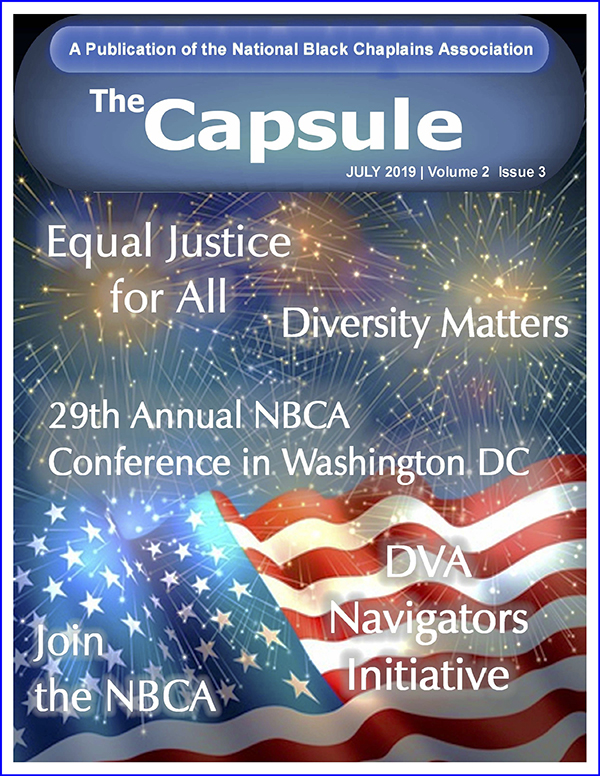 CLICK IMAGE FOR FULL MAGAZINE [PDF] |
| RETURN TO TOP |
CSC Chaplain Inters Marine Killed at Pearl Harbor |
| by Reuben Contreras Originally published on ABC30.com 07 December 2018 Editor's Note: Chaplain Janet Clarke is a CSC Navy Chaplain |
|
On the 77th anniversary of the attack on Pearl Harbor the family of Jack Cremean finally has closure. Cremean was a marine serving on the U.S.S. Oklahoma when the Japanese attacked Pearl Harbor on December 7, 1941. Donna Moren is a niece of Cremean. She never met her uncle, he died many years before she was born. "We knew of him. He wasn't a mystery. My mother and my aunt talked of him constantly. We had things that he had sent home from Hawaii. So we had memories," said Moren. Those memories include photos plus a grass hula skirt and sailor doll Cremean sent home before he died. Cremean was laid to rest Friday afternoon in Madera. His family wondered if he would ever have a finally resting place since Cremean's parents didn't know for months that their only son had been killed. "It was an emotional roller coaster for them because at first they got a telegram telling them he was missing in action. Then they got a telegram telling them no we were wrong he's on another ship," said Esther Spradlin, Cremean's Niece. He was declared dead the following March but his remains were never identified until of August of this year. Cremean's sister Ruth was contacted by officials in 2001 for a DNA sample to help identify remains in the graves of the unknown in Hawaii. But closure would come two years too late. "She hoped to live long enough to find him but she passed away in September of 2016. So we know they are together in Heaven and she knows where he is but his remains were really important to find and to give closure," said Moren. Cremean was laid to rest at the same cemetery where his parents are buried. He is survived by his three nieces, three nephews and their families. |
| RETURN TO TOP |
CSC Chaplain Offers Invocation in Honor of WWI Fallen |
| 01 December 2018 Editor's Note: Brian Bohlman is a CSC Air Guard Chaplain |
On December 1, 2018, Chaplain Brian Bohlman was in Normandy, France, for a special observance to honor the fallen from WWI. The Wreaths Across America organization filmed the observance and posted it on FaceBook. At 15:45 into the clip, Chaplain Bohlman offers the invocation. |
| RETURN TO TOP |
CSC Chaplains Mentioned |
| Originally published in The Chaplaincy Connection December 2018 Editor's Note: Brian Bohlman and John Bailey are CSC Air Guard Chaplains |
Chaplain, Lt Col, Brian Bohlman is a CSC Air Guard Chaplain sent to Germany on special assignment: Chaplain, Major, John Bailey is also a CSC Air Guard Chaplain. He is on assignment to some warm, sandy parts of the world. He is making morale visits and shopping at the local haberdashery:  CLICK IMAGE FOR FULL NEWSLETTER [PDF] |
| RETURN TO TOP |
Moral Injury and the Power of Forgiveness |
| Originally published in Spirit of Chaplaincy November 2018 Editor's Note: Chaplain Neil Farrar is a CSC VA Chaplain |
| To view or download in PDF format, please click [HERE] |
Morals are often unspoken, until they are violated. Scott James in "An Introduction to Evolutionary Ethics" proffers, "Part of what makes moral creatures moral, then, has to do with thinking that acting in ways that are forbidden deserves punishment while acting in ways that are (for example) selfless deserves praise." This might explain why so many Veterans find themselves engulfed in shame whenever they encounter a Moral Injury. There are many who believe mankind is made up of body, mind and spirit. If this is true, it becomes easier to recognize a Moral Injury can be egregious to each part of their person. It can negatively impact the body, plague the mind and damage the spirit. Moral Injury will often find people expressing different types of negative expressions (fruits) in their lives. I would contend that if the root – or the actual offense/trauma – is not dealt with, then people will be plucking debilitating fruit for the rest of their lives. Relief comes by addressing the root cause. Please consider the following story as one example. For the purpose of this article, we will call her Amy. I first met Amy in our psych ward, and like many Veterans there, she was initially hesitant to meet with the Chaplain. All she wanted to do during her first day on the ward was to stay in her room and be left alone. I read in her chart where Amy came to the ward because of suicide ideation. She self -medicated with alcohol, which eventually led her to breaking the law. I soon learned her drinking was also hav- ing a negative impact on her faith practice. The following day, Amy agreed to meet for a short visit. Amy slowly began to reveal how she had been a victim of Military Sexual Trauma (MST) while serving in the armed forces. She not only endured the assault, but was impreg- nated by her assailant. Amy looked like an empty shell as she shared her story. Amy went on to say this was not the first time she had endured such a violation, but had been violated by a family member when she was a child. I then asked her if she had ever considered forgiving both perpetrators. She asked, "Why would I ever do such a thing?" I told her that it would not excuse what they did; however, forgiving them would set her free from the shame she had been carrying since she was a little girl. Amy then asked me to speak more on this. It was then that I asked what her religious preference was. She said, "Baptist." We started from there by recognizing first and foremost that forgiveness is not an emotion. Instead, it is an act of the will. Just as Amy’s God of the Bible chooses to love and forgive her, so those within her belief system must choose whom they will love and forgive. She sat quietly musing over what was said. Amy confided that she did not know how to forgive. I suggested that we look at some Scriptures for guidance. First, we turned to Proverbs 18:21, "Life and death are in the power of the tongue, and those who love it will eats its fruit". Then, we turned to Luke 6:45, "The good person out of the store of goodness in his heart produces good, but an evil person out of the store of evil produces evil; for from the fulness of his heart, his mouth speaks." We dis- cussed how each heart is a reservoir that contains our deepest thoughts and emotions; however, our tongue is the tool by which we communicate them to others. I shared with Amy the challenge with forgiveness is that we must choose as an act of our will to start speaking what we want to be in our heart; instead of what is already in there. Otherwise, we encounter a cyclical roller-coaster of emo- tions that prevents us from fully dealing with the trauma. I reiterated to Amy that a Moral Injury is shame based, and forgiveness is what breaks the shame; yet, forgiveness is an act of the will. Amy was encouraged to consider taking some time to think all of this over. I suggested she might use prayer to offer forgiveness. Amy asked if there might be an example of how to employ such a prayer. I offered the following: "Lord, I choose as an act of my will to forgive (name of perpetrator), for (speak to whatever they did that needs forgiving). Amy was encouraged to pray this prayer privately. She then asked if I might pray for her. When we finished, I looked up and her entire countenance had changed. What had previously sat before me was a woman who looked hopeless. Now she was beaming with a smile that went from ear to ear. It was one of the most transformational events I have ever witnessed. Later in the day, several the nurses on the ward asked what had happened with Amy, because they could not believe what they were seeing. On Friday morning at our team meeting, Amy’s Psychia- trist shared how her dramatic change might only be a short-lived spike. Nevertheless, everyone was thrilled to learn on Monday morning that Amy had not digressed over the weekend; rather, she had remained steadfast. Her Psychia- trist ended up discharging Amy later that day. Like so many other Veterans who are cloaked in shame with whom I have worked, forgiveness was the key for them being set free. Each V eteran’ s story is different; yet, the process has been the same. Some Veterans needed to forgive someone else, while others needed to forgive God. Many needed to forgive themselves or any combination of the three. My experience has shown me that truly, for- giveness is the most efficacious tool we can use when it comes to Moral Injury. Ch. R. Neil Farrar |
| RETURN TO TOP |
CSC Chaplain Receives 163rd Emerson Foundation Award |
| 21 November 2018 Editor's Note: Chaplain Brian Bohlman is a CSC chaplain now deployed to Europe |
|
| RETURN TO TOP |
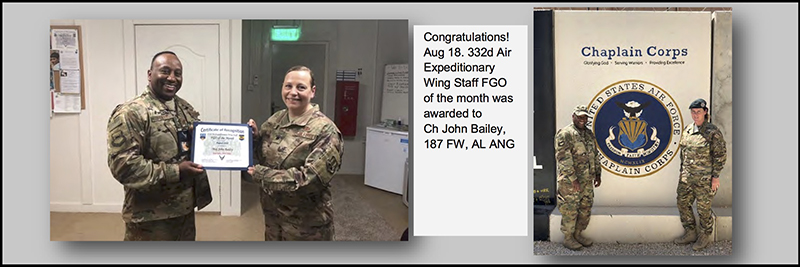
FGO of the Month Awarded to CSC Chaplain |
| Originally published on page 3 of The Chaplaincy Connection November 2018 Editor's Note: John Bailey is both an Air Guard Chaplain and a VA Chaplain under CSC endorsement. |
CLICK ON IMAGE TO DOWNLOAD FULL NEWSLETTER [PDF] |
| RETURN TO TOP |
Chaplain Empowers Soldiers at CSTX |
| Video by Staff Sgt. Sarah Zaler Originally posted on Exercise News Day August 12, 2018 Editor's Note: Chaplain (CPT) Dawn Quiocho is a Coalition of Spirit-filled Churches chaplain in the US Army Reserve |
WI, UNITED STATES — Army Cpt. Dawn Quiocho, Batallion Chaplain with the 90th Chaplain Detachment from Schenectady, NY, held religious services for Soldiers at the Combined Support Training Exercise on Fort McCoy, WI, on August 12. The role of a chaplain is to provide moral and spiritual support to Soldiers, and help them cope with the challenges faced during training. |
| RETURN TO TOP |
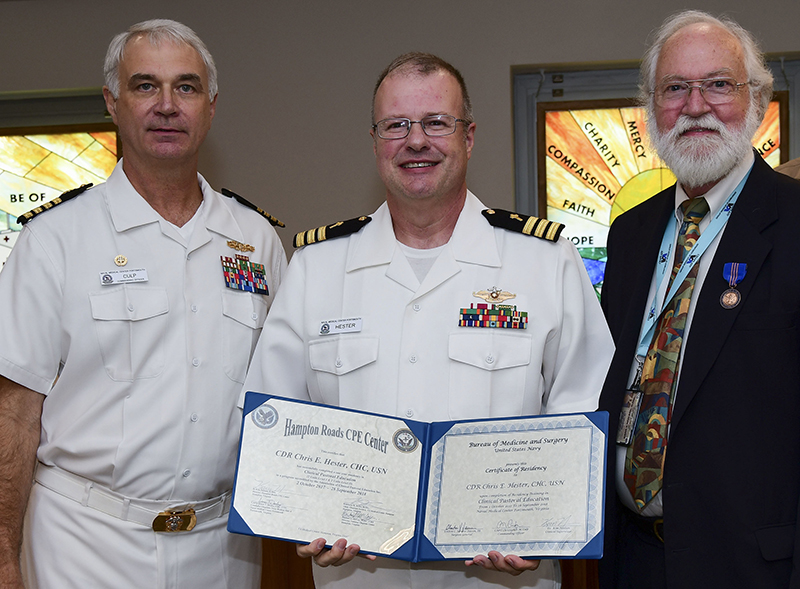
CSC Chaplain Graduates from Pastoral Care Residency Program |
| by Christina Johnson Originally published on DVIDS 28 September 2018 Editor's Note: Chaplain Chris Hester is a CSC chaplain |
Naval Medical Center, Portsmouth, VA — Naval Medical Center Portsmouth, in conjunction with Hampton Veterans Affairs Medical Center (HVAMC), held a graduation ceremony for the nine members of the 2018 class of the Pastoral Care Residency Program, Sep. 28.
The year-long Clinical Pastoral Education (CPE) training, sponsored by Navy Chaplain Corps and Navy Medicine, is a joint initiative between the Navy and Department of Veterans Affairs (VA), and it prepares chaplains for a wartime environment where they could be called upon to provide mental and emotional support. "Formed in 1984, the Hampton Roads Clinical Pastoral Education Center united the efforts of the Navy Chaplain core and the Veteran’s Health Administration’s National Chaplain Center to provide clinical pastoral education for both the United States Navy and Veteran’s Administration chaplains," explained the master of ceremony, Lt. Cmdr. Chad McIntosh, Navy Chaplain Corps. "During the course of the past year, these residents completed a combined total of 3,500 pages of reading, over 400 hundred (hours) of structured group and individual supervision, and more than 1,200 hours of clinical practice in patient and veteran care." The program is primarily for Navy and VA civilian chaplains, but can include reservists and members of the other services. This year's class was comprised of four Navy, one Royal Navy, and four civilian chaplains. Dr. Kim Nielson, HVAMC education supervisor, has been with the program for the last 33 years, and he spoke about the importance of CPE. "The miracle here is what these students have participated in," said Nielson. "It’s the miracle of being able to look past the way someone asked fulfillment of their need to the need itself. One of the goals for CPE is that we create some good discerning abilities to see other’s needs." The Navy CPE training graduates are now eligible for a Navy 1440N sub-specialty designation. "But you’re all eligible for board certification," said Capt. Christopher Culp, NMCP’s commanding officer. "And I challenge you all to pursue and attain that." "I challenge you to use this year, this set of skills, this enhanced insight that you have , to do what you do in the chaplain community like what we do in the medical community…to heal, to teach, to inspire, and, most importantly, to provide joy," added Culp. "We need that. We need that on the Navy side, need that in America, and we need that in our society." The graduates included Cmdr. Paul Greer, Chaplain Corps; Cmdr. Chris Hester, Chaplain Corps; Lt. Cmdr. Todd Mallory, Chaplain Corps; Lt. Jared Smith, Chaplain Corps; Reverend David Calhoun, Master of Divinity; Reverend Holly Heikkila, Master of Divinity; Reverend Dallas Jones, Master of Divinity; Reverend Jacqueline Nicholson, Master of Arts; and Chaplain Tutor Botwood, Royal Navy (not in attendance). As the U. S. Navy's oldest, continuously-operating hospital since 1830, Naval Medical Center Portsmouth proudly serves past and present military members and their families. The nationally acclaimed, state of the art medical center, including its ten branch and TRICARE Prime clinics, serves the Hampton Roads area; in addition to premier research and teaching programs designed to prepare new doctors, nurses and hospital corpsmen for future roles in healing and wellness. |
| RETURN TO TOP |
CSC Chaplain Promotes Suicide Prevention Event |
| Video by Winn Army Community Hospital published to YouTube 13 September 2018 Editor's Note: Chaplain Jason Davis is a CSC chaplain |
| RETURN TO TOP |
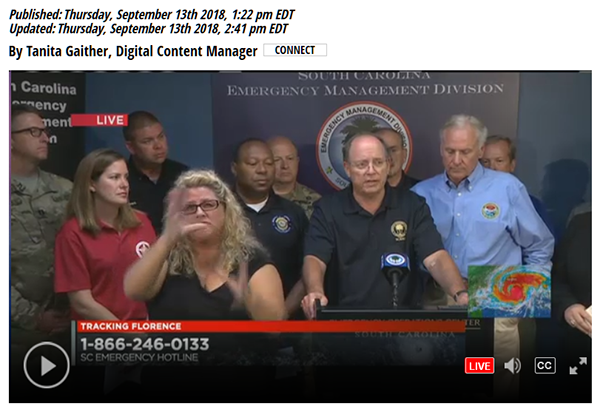
CSC Chaplain on TV with SC Governor on Hurricane Response |
| Originally aired on WISTV 13 September 2018 Editor's Note: John Denny is a CSC Chaplain in the Army National Guard |
Army Guard Chaplain John Denny on TV with Governor Henry McMaster of SC during Florence. He was representing the National Guard and its response to guidance from the Governor. At the beginning of Thursday's news conference about the state's response to Hurricane Florence, Gov. McMaster asked Chaplain Denny to lead the leaders in prayer. (10:20 to 11:50 in the video) Here's what he said: "Help us to exercise sound judgment in our preparations for the storm. Help us to be wise in our decisions. Help draw us closer to each other, and strengthen our bonds within our communities, and as a state, though our care for one another.
|
| RETURN TO TOP |
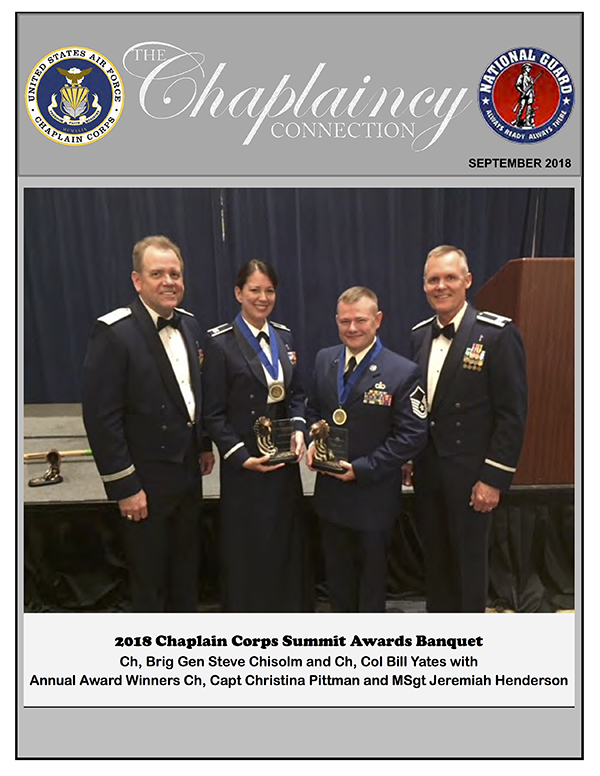
Photos From the Field... |
| Originally published in The Chaplaincy Connection September 2018 Editor's Note: John Bailey is a CSC Chaplain in the Air National Guard deployed to Southwest Asia |
Photos of Chaplain John Bailey keeping busy during his deployment to Southwest Asia appear in this edition of The Chaplaincy Connection newsletter of the Air National Guard Chaplains Corps. See page 7.
CLICK ON IMAGE TO DOWNLOAD [PDF] |
| RETURN TO TOP |
Four CSC Chaplains Published |
| Originally published in The Capsule August 2018 Editor's Note: Alfray Thomas, Jeffery Stallworth, LaToya Smith, and Barry Wheeler are CSC Chaplains |
In this edition of The Capsule of the VA National Black Chaplains Association, 4 CSC chaplains have columns: Alfray Thomas, Jeffery Stallworth, LaToya Smith, and Barry Williams.
CLICK ON IMAGE TO DOWNLOAD [PDF] |

| RETURN TO TOP |
Chaplain Empowers Soldiers at CSTX |
| Video by Staff Sgt. Sarah Zaler Originally posted on Exercise News Day August 12, 2018 Editor's Note: Chaplain (CPT) Dawn Quiocho is a Coalition of Spirit-filled Churches chaplain in the US Army Reserve |
WI, UNITED STATES — Army Cpt. Dawn Quiocho, Batallion Chaplain with the 90th Chaplain Detachment from Schenectady, NY, held religious services for Soldiers at the Combined Support Training Exercise on Fort McCoy, WI, on August 12. The role of a chaplain is to provide moral and spiritual support to Soldiers, and help them cope with the challenges faced during training. |
| RETURN TO TOP |
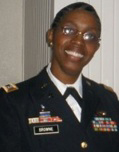
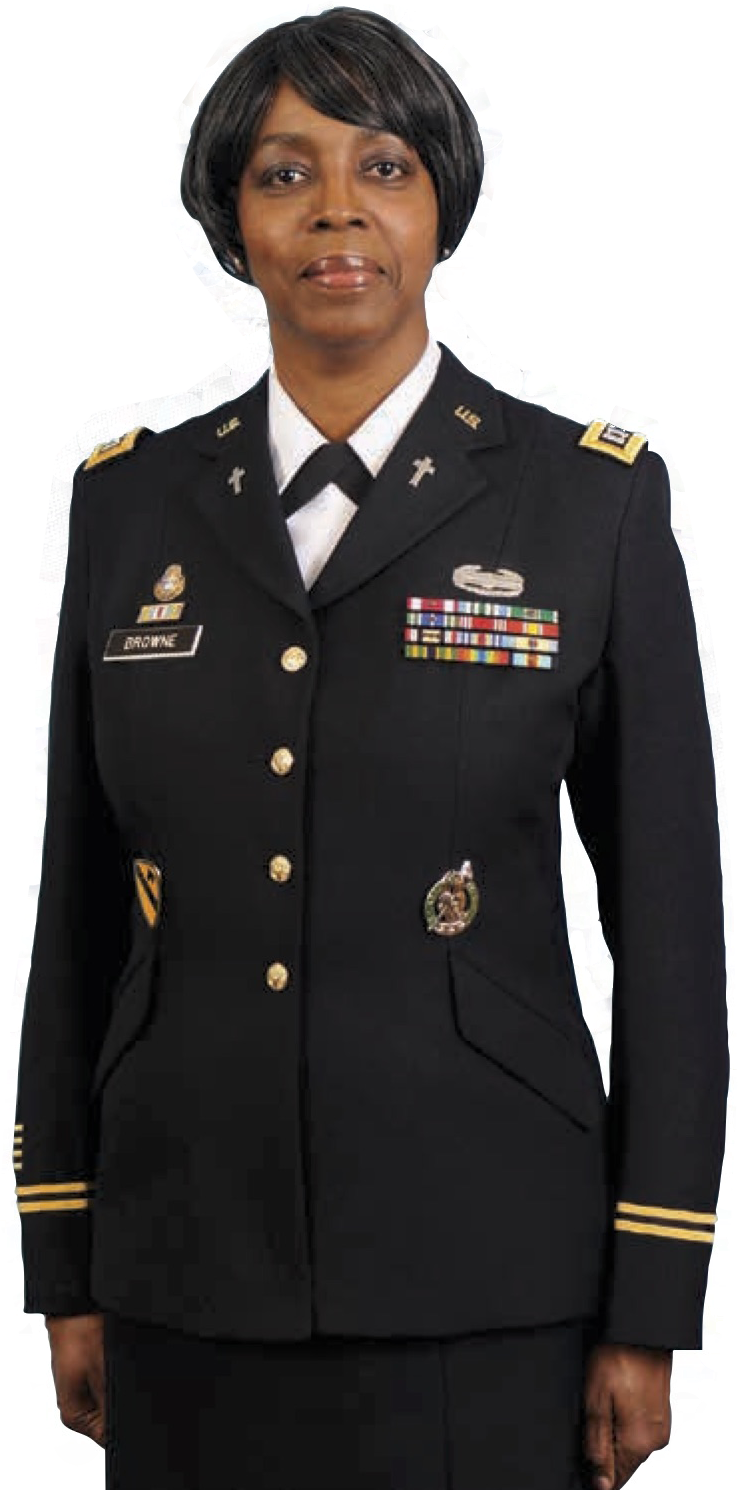
An Unconventional Path to Army Chaplaincy |
| by RaeAnn Slaybaugh Originally printed in Church Executive July/August 2018 and featured in the new Army Chaplains recruiting literature. Editor's Note: Chaplain (MAJ) Sharon Brown is a CSC Chaplain |
For Chaplain Major Sharon Browne, D.Min., the road to active-duty chaplaincy was, as she calls it, "a bit circuitous." At 19, Browne joined the Army and, as an enlisted Soldier, became a Christian. The example of a female drill sergeant was pivotal. "I watched her for about eight months, and she was an authentic Christian," Browne recalls. "She didn't swear, but she was very rm with her Soldiers. "I want to believe that it's because of her witness that I decided to become a Christian."
"Where do you belong?" Browne’s spiritual formation happened while stationed in Germany. As a divorcee, she says her Christian story wasn’t perfect; however, it made her relatable to fellow Soldiers. Although Browne wasn’t aware of the chaplain corps at the time — let alone in pursuit of it — people often sought her out for chaplain-type conversations. "All that time, God was grooming me," she says. When Browne left active duty, she returned to New York, enlisted in the Army Reserves, and set about putting her life back together after the divorce. Unpaid, she taught youth classes and Sunday school in a Pentecostal church. She led revivals and supported funerals and weddings. "I did it because I loved the Lord," she recalls. "God challenged me." When Browne began her undergraduate degree at New York’s College of New Rochelle, professors encouraged her to consider seminary. She resisted; she had a well-paying job and "was surviving." But, September 11, 2001 was a turning point in Browne’s faith journey: on that day, she found herself standing at Ground Zero. "I watched people jump out of the buildings because their options were to either burn or die that way," she recalls. Among the chaos, she thought: How many of those people are dying without doing what God told them to do? "I didn’t want that to be my story," she recalls. Soon after, Browne enrolled in seminary. It wasn’t long before the dean of the seminary asked a crucial question: Where do you belong? "I realized that the only people I knew how to talk to were Army people," she says. So, on her 41st birthday, Browne reenlisted. She was deployed right away. During that time, chaplains helped her plot her own path to the chaplaincy. Now, 10 years later, Browne is a Major and recently earned her D.Min. She is one of 65 female chaplains on active duty — just 4.3% of the chaplain corps. For many Soldiers Browne meets, she is the first female chaplain they’ve ever met. "My prayer is that there will be a woman somewhere, whether young or more mature, who will sense the call of God that says, This is a possibility for you." Answering the call For Browne, the most rewarding aspect of Army chaplaincy is walking with Soldiers in varying stages of their lives — the highs and the lows. She has married Soldiers in her unit and baptized and dedicated their children. She has also of ciated funerals and comforted Soldiers in battle. When a young man was killed on patrol and his body was brought back to camp, the young Soldier who had tried to revive his friend was in desperate need of comfort. "He was so angry; he really just wanted to just explode," she says. "He had blood on his face. I took a rag and started wiping it. I just talked to him. Maybe it's maternal instinct, but that calmed him down." Joyful or tragic, Browne says she is grateful for any opportunity to minister to Soldiers. "They help me to know that I've been inculcated into the unit," she says. "It’s extraordinarily rewarding when people allow you into their space." While the rewards are many, Browne also strives to be transparent about what’s required of an Army chaplain applicant. First and foremost, one’s spiritual discipline needs to be secure. "Actually, you’ve got to get your mind, body and spirit together," she clari es. "You need to be strong in whatever your theological formation is, and make sure your spiritual life is strong enough to handle the encounters you’ll face." Just as important, of course, is knowing what the Army chaplaincy is not. As an active-duty, full-time chaplain, Browne emphasizes that she’s "not jumping out of airplanes every day." Rather, some days are quiet; others, mildly chaotic. "It’s important to understand that this is de nitely a exible environment." Another misconception Browne hopes to dispel is that the Army dictates how its chaplains pray and preach. "The Bible says, ‘with loving kindness have I drawn thee,’" she explains. "So, I try to be as inclusive and supportive as I can. But, if you catch me in the pulpit on Sunday morning, you're going to get straight Jesus, no chaser." A great chaplaincy option for full-time church leaders Naturally, active-duty, full-time chaplaincy isn’t right for everyone. For some — full-time church leaders, in particular — Browne suggests that Army Reserve chaplaincy can offer a better fit. From a practical standpoint, it makes good nancial sense. Browne cites a recent Pew Research study showing the average age of clergy in the pulpit is 55. Pastors aren’t retiring — not because they don't want to, but because they can't. "I believe that one of the things that we can do as wise stewards of the resources that God gives us — including our time and our young, strong bodies — is to create multiple streams of income," she says. Additionally, Army Reserve chaplaincy builds experience. "If you’re viewing your worship space as ‘church,’ it becomes important for you to gure out how to stay relevant in whatever context you’re in," she advises. Finally, Reserve chaplaincy offers an opportunity to expand the church body. "Those 200 to 1,500 people you encounter during a drill weekend are potential members," Browne points out. "If you want to take the church outside the walls, this is one way to do it." |
| RETURN TO TOP |
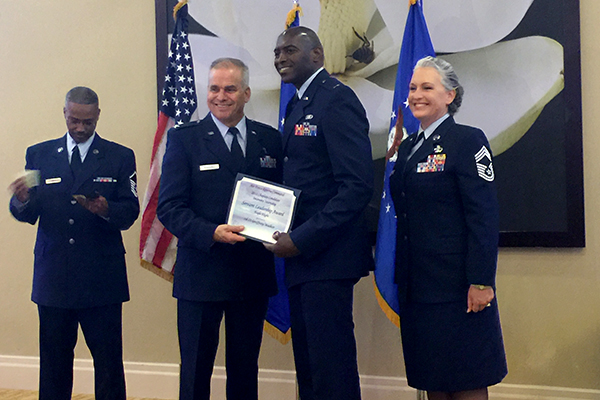
CSC Chaplain Earns "Servant Leadership Award" |
| July 27, 2018 Editor's Note: Chaplain Candidate 2LT Geoffrey Walker is a CSC endorsee. |
|
| RETURN TO TOP |
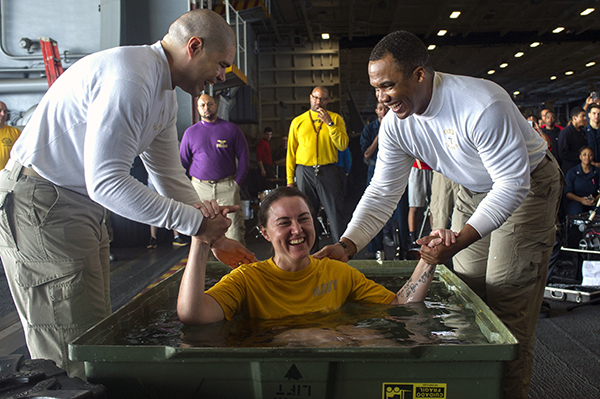
Baptism Aboard the USS Truman |
| July 10, 2018 Editor's Note: Chaplain (Lt.) Jereme Samson is a CSC chaplain. |
|
| RETURN TO TOP |
Special Olympics thanks volunteers and athletes, including a CSC Chaplain |
| Originally printed in The Island Packet May 18, 2018 Editor's Note: Chaplain (Lt.) Janet Clarke is a CSC Chaplain |
Thank you to everyone who made our Special Olympics track and field event a great success and fun for the athletes and volunteers. More than 200 athletes participated from schools in Beaufort and Jasper counties. The event was held April 26 at Hilton Head Island High School Stadium. Thanks to the many volunteers: St. Gregory the Great Knights of Columbus, Sun City Lions Club, Hampton Hall Community Foundation, Hilton Head and Bluffton high school JROTC and teacher cadets and the Bluffton Township Fire District. A very special thank you to Lt. Chaplain Janet Clarke and her Marine volunteers from Marine Corps Recruit Depot Parris Island who organized the event. We appreciate the many other individuals who also volunteered their time. Thanks also to the businesses and organizations that provided funding, goods and services: Palmaccio Management/McDonald's, Tom Cramer's Home Services, Kinghorn Insurance/Hub International, The Bargain Box, St. Francis Thrift Shop and Children's Relief Fund. The mission of Special Olympics is to provide year-round sports training and athletic competition in a variety of Olympic-type sports for individuals with intellectual disabilities, giving them continuing opportunities to develop physical fitness, demonstrate courage, experience joy and participate in a sharing of gifts, skills and friendships with their families, other Special Olympics athletes and the community. Without the support of our community, this mission could not be fulfilled. |
| RETURN TO TOP |
The Opioid Crisis in America: A Way of Dealing With It as Chaplains in Our VA |
| by Chaplain Rev. Barry Wheeler, Martinsburg, WV Originally printed in The Capsule May 2018 Editor's Note: Chaplain Barry Wheeler is a CSC Chaplain |
We all have heard about the opioid crisis in America, and we as Chaplains wish to help all people who are in need in our facilities. The 2 groups of individuals affected by this crisis are the legitimate opioid users who have become accustomed to having their chronic pain treated by opioid medications; and the abusers who may have taken the medication legitimately in the past but are now abusing it. Both of these types of patients are impacted by the mandatory reduction in opioid prescribing, and hence, need care. What can we as Chaplains do to assist these patients? For our users, the first obvious intervention is prayer that the patient may be healed of the infirmity that is causing them pain. God is still in the healing business today! When the healing does not come immediately, we can recommend healing music (i.e. healing music search on YouTube), scripture reading as distraction therapy, and Yoga and Tai Chi. I believe we chaplains would be the ideal instructors for the Tai Chi so as to keep the spiritual element in line with patients’ belief systems. The Christian Bible (Matthew 4:18) addresses the Holy Spirit (Pneuma) as the source of healing for the brokenhearted; deliverance of captives (to opioid addictions); recovering of (spiritual) sight for the blind; and liberty for the bruised (of body, soul, and spirit). Deep breathing exercises (focusing on our breathing and the Holy Spirit/Breath) bring calmness from anxiety, which may reduce the severity of pain. Meditation is another spiritual exercise with which we can assist. King David, who was no stranger to pain, meditated on God’s Law day and night (Psalm 1:2). Isaac (Gen 24:63), Joshua (1:8), and Paul (1 Timothy 4:15) speak of meditation and recommend it as a normal spiritual discipline. For our abusers, we can provide prayer for deliverance from this disease. We offer empathic listening as they share the traumatic experiences of their past that may have contributed to them abusing substances to escape their emotional pain. We can provide spiritual counseling from their faith tradition, and assist them in dealing with their moral injuries. We can assist them in giving and receiving forgiveness for God, for others, and for themselves; as well as dealing with any grief and loss that they may be experiencing. We can offer Celebrate Recovery Groups or assist local churches with providing them. In our weekly Grief and Loss class here at the Martinsburg VAMC we discuss grieving the death of the parts of ourselves that we lost in combat/MST. For instance, just before Desert Storm, I helped my brother-in-law move a wall inside his house. We ran into several set-backs as we worked, and he commented that it seemed I never got upset about anything. After combat, it seemed that everything was able to set me off. That patient part of myself was another victim of the war, and I miss it. I had to grieve that loss within myself, as well as the loss of my innocence, and belief that I was invincible. I then had to learn how to be patient when it no longer came naturally. God uses our own struggles and victories to form and inform us so we may assist others in struggles and temptations. |
| RETURN TO TOP |
The Meaning of What Easter Meant to Me Then and Now |
| by Chaplain Rev. Latoya Smith, Leavenworth, KS Originally printed in The Capsule May 2018 Editor's Note: Chaplain LaToya Smith is a CSC Chaplain |
When I was a little girl, I could remember my mother and my aunt, who were regular church goers, say, "Alright ya’ll it’s time to go Easter shopping". I would always get so excited, because that meant to me, the beautiful colorful dresses, with the over kill of ruffles at the bottom of it. The ruffles were so big, to the point, I couldn’t even see my pretty shiny black or white strapped shoes, or my white ruffled socks. Oh yeah, I can’t forget the white gloves, one millions barrettes in my hair, and to top it off, the great big Easter basket, that was bigger than me. I can remember my mother buying us dye and dying what seemed like hundreds of eggs and then hiding them all over the place at church or at home, which we would spend so much time looking for them. They soon found out that eating too many boiled eggs wasn’t a good idea, so they changed to the plastic eggs with candy inside. That was Easter to me then. At church, I can recall all of the women wearing white, and the men wearing white or black suits depending on their position in the church. The preacher would wear his big shoulder padded, white beautiful robe. I remember walking in the doors and hearing, "aww... look at her, she look so cute with her pretty dress on". I was shy, but I loved the compliments. After the preaching, and please don’t ask me what the preacher said, there would be an Easter play and then we would go Easter egg hunting. I never understood where the rabbit or eggs came into the picture, but it was fun. Even though I never understood the sermons, I never heard them mention anything about eggs or rabbits in the preaching. That was Easter to me then. What is Easter to me NOW I believe Easter represents true freedom and true holiness (Eph. 4:24 KJV) for those who wholeheartedly believe in Jesus’ death, burial, resurrection, ascension, and that He’s coming back! Hey glory....I just got happy. When Jesus was resurrected from the dead, it was not just a symbol of deliverance from sin, but for those who truly believe, it is deliverance from the power of sin. It also is freedom from the penalty of sin, which is death (eternal damnation for the soul and the spirit) (Rom 6:23 KJV). If the Son (Jesus) therefore shall make you free, ye shall be free indeed (St. John 8:36, KJV). His birth was the beginning of freedom from eternal damnation. Jesus ‘life, even though he was not born in sin, represented how mankind should live before God (free from sin), though many think this is impossible. (For he hath made him to be sin for us, who knew no sin; that we might be made the righteousness of God in him 2 Cor. 5:21). Jesus’ death represents what man should do daily (1 Cor. 15:3); stay connected spiritually to a spiritual God (St. John 4:24 KJV). Jesus’ birth, life, and death, which for mankind means you must be born again (St John 3:7), positions our life to be set apart from the world, dying daily to sin (1Cor. 15:31), and walking daily in newness of life (Romans 6:4 KJV). The resurrection of Jesus Christ from the dead or Easter Sunday, is the gift that God gave because He loves us, His creation. I live for God through Jesus Christ because Jesus is the atonement for my sins. His death means that He died to the very thing that was keeping me from God and eternal life. Easter Sunday to me now, is no longer about the little girl in the pretty, colorful, extremely ruffled dress, but the woman of God who believes in the full gospel of Jesus Christ and the power of His resurrection and what it did for me when I believed on it by faith. Easter Sunday is not the only day I focus on the resurrection of Jesus Christ because Jesus is never going to die for me again. I have to keep in memory that He died (once), He was buried, and that He was raised up from the grave, but also that He is coming back, and I must be ready for His return. I believe this daily. I can’t close with any other scriptures than these: 1 Corinthians 11:24-26 And when He had given thanks, He brake it, and said, take eat: this is my body which is broken for YOU: do this in remembrance of Me. After the same manner also He took the cup, when he had supped, saying, this cup is the new testament in my blood: this do ye, as often as ye drink it, in remembrance of Me. For as often as ye eat this bread, and drink this cup, ye do shew the Lord’s death till He comes. |
| RETURN TO TOP |
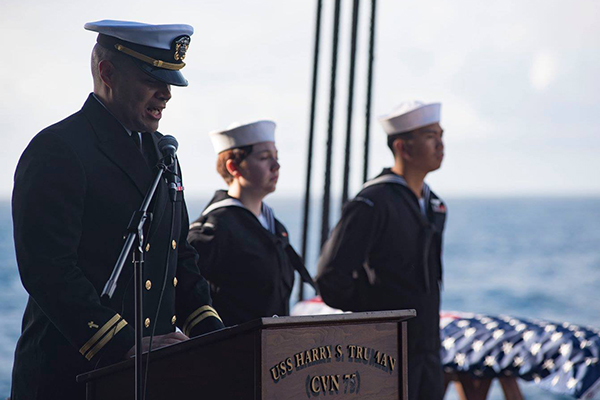
CSC Chaplain speaks during a burial-at-sea aboard USS Harry S. Truman |
| April 23, 2018 Editor's Note: Chaplain (Lt.) Jereme Samson is a CSC chaplain. |
|
| RETURN TO TOP |
With the Holy Spirit’s help, Olga Westfall speaks words of healing to veterans in physical, mental, and spiritual recovery. |
| by Stefani McDade Originally published April 19, 2018 on In Touch Ministries Editor's Note: Chaplain Olga Westfall is a CSC chaplain with both the VA Medical Center in Atlanta and with the Air Force Reserve. |
| Olga Westfall’s usually bright and smiling eyes are shut tight in earnest prayer. Before her, eight female veterans sit in a circle, their heads bowed. "Almighty God, You saw us the first day we came into the military"—Westfall’s words fill the small chapel, her warm voice marked by a distinct Ukrainian accent. Every Friday, she leads this same group of women in a devotional—listening to their struggles and sowing words of life into their hearts.
Westfall is a chaplain in one of busiest VA hospitals in the Southeast. Considered "essential personnel," she provides spiritual counsel to hundreds of veterans admitted to the medical and psychiatric floors. Here, men and women are treated for various physical and mental health issues often associated with their service in the military. In addition to her daily rounds, Westfall also hosts several "spiritual groups" throughout the week—including one exclusively for women. Whenever Westfall visits with veterans, the joy she brings into each room stays long after she leaves, lingering in the smile on their faces. Each time she makes her rounds, she brings a stack of In Touch devotionals to hand out—and always keeps an extra supply in the "Chaplain’s corner" for when someone stops by in a moment of need. At the end of every visit, Westfall always asks veterans if they would like her to pray with them. Very few say no. Even the hospital staff have noticed a difference in the patients who are spiritually healthy and will often request Westfall by name. Many of their patients suffer from post-traumatic stress disorder (PTSD), and some struggle with suicidal tendencies. Whenever the atmosphere is too heavy, Westfall relies on the joy of the Lord for her daily strength. And although she pours herself out day after day, she still finds the energy for family time at home with her husband and three sons, two of whom are adopted from the Ukraine. Now, thanks to her discipleship and the support of their weekly groups, some veterans have begun to redeem their story and minister to others facing similar struggles. Noting that the Lord often chooses broken people to bring about healing in His kingdom, Westfall marvels that no matter how close someone is to death—whether on the front lines or facing enemies within—God is making all things new. |
| RETURN TO TOP |
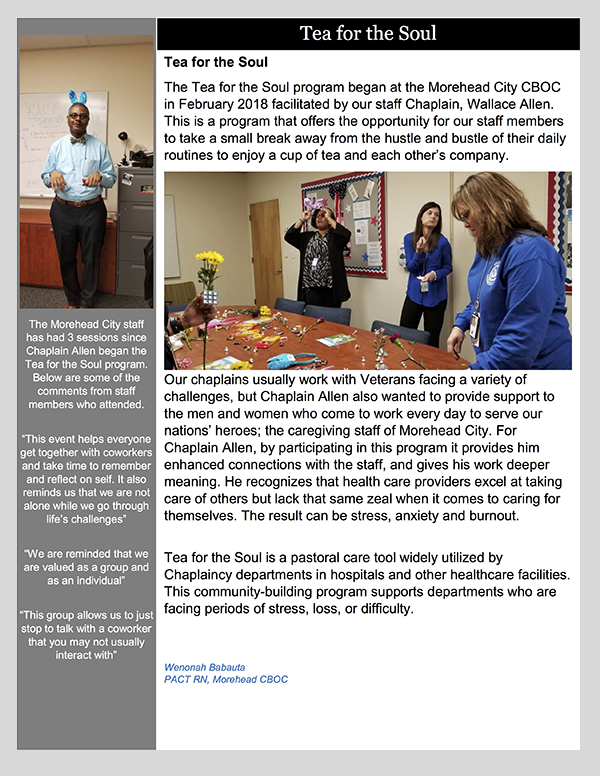
Tea for the Soul program facilitated by CSC Chaplain |
| Originally published April, 2018 in Straight Talk newsletter Editor's Note: VA Chaplain Wallace "Al" Allen is a CSC Chaplain |
| RETURN TO TOP |
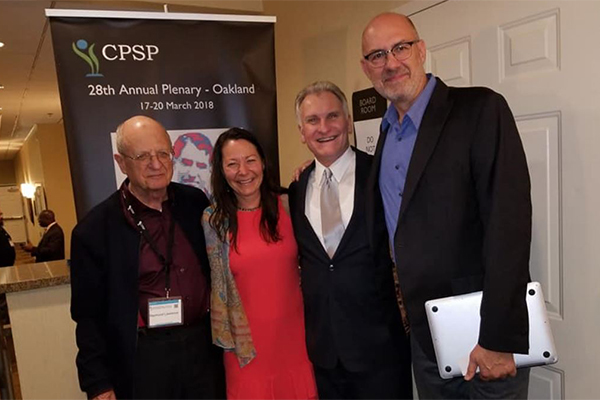
28th Annual College of Pastoral Supervision and Psychotherapy Plenary |
| March 19, 2018 Editor's Note: Reverend David Plummer is CSC Executive Director and CPSP Co-President |
|
| RETURN TO TOP |
A Marine, a Soldier and a Sailor walk into a ship's chapel |
| by MC3 Cole C. Pielop USS John C. Stennis Public Affairs Originally posted November 16, 2017 on https://www.militarynews.com Editor's Note: Navy Chaplain Candidate Lt. Sarah Gomez-Lorraine is a Coalition of Spirit-filled Churches endorsee |
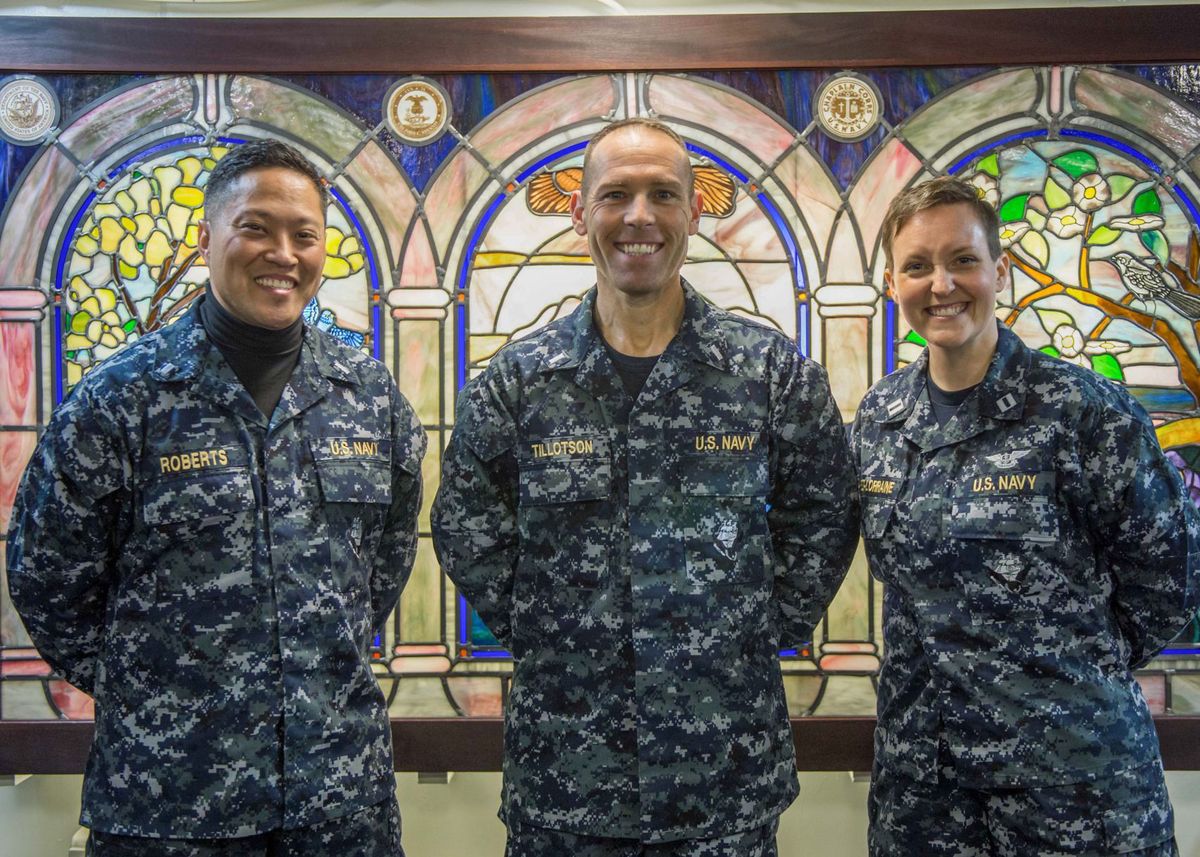
PACIFIC OCEAN When Sailors join the service they raise their hand and swear to serve a higher purpose, but for three Sailors who got underway aboard USS John C. Stennis (CVN 74) Nov. 3, it was to serve a higher calling.
Lt. Sarah Gomez-Lorraine, Lt. j.g. Jerry Roberts and Lt. j.g. Frank Tillotson are inactive reserve Sailors enrolled in chaplain candidate school. The chaplain candidates, each with different religious backgrounds and prior enlisted service in the Marine Corps, Army and Navy, came together on the underway to gain on-the-job experience and use the skills they learned during the first part of their chaplain candidate schooling. "My mission here is to use what we’ve been trained in and actually see it in action," said Gomez-Lorraine, a prior enlisted Sailor, from Kodiak Island, Alaska. "Now that I’m on a ship with over 3,000 Sailors, it’s an incredible place to implement that. I believe everyone has a story and I want to hear them, and see how I could help them in whatever their journey is. This is just a great time for all of us to learn while we’re here." Each candidate has his or her own reason for becoming a chaplain. For Roberts, from Dyersburg, Tennessee, it seemed destined. "I’m a military brat and a preacher’s kid," said Roberts. "I’ve got two great passions in life; that’s ministry and military. I served 13 years in the army and two were spent in Iraq. Being on a ship of this magnitude is a day and night difference, but I feel like I can help make a difference." Tillotson was inspired to become a chaplain after seeing the struggles other service members have dealt with after coming home from combat. "After six years as an active duty Marine and meeting Sailors and Soldiers coming back from Iraq and Afghanistan and dealing with issues, I saw how impactful chaplains could be," said Tillotson, from Columbus, Ohio. "As I was growing in my faith, I started understanding there was a need for healing above and beyond physical wounds. I met with a retired Navy chaplain at the VA [Veterans Affairs] and that’s where the seed was really planted for me to be a chaplain." After years of schooling and preparing, the candidates were enthusiastic to put their skills to work. "On the job experiences like these are hard to come by and getting this opportunity was phenomenal," said Gomez-Lorraine. "We got to come out here and do what we have been trained to do and the hospitality that was shown made me really feel like I was part of the crew." Lt. j.g. David Albano, a commissioned chaplain stationed aboard John C. Stennis who recently completed the same program, said he was excited to share the experience with the chaplain candidates. From showing them around the ship and meeting Sailors to leading services, Albano said this has been a great experience for everyone. He also added how grateful he was to the crew for welcoming the candidates and making them feel at home. The road to becoming a Navy chaplain can be long and difficult. Requirements differ depending on the religion and denomination, but the common standard for entering the chaplain candidate program is having a master’s degree in divinity, which can take anywhere from two to five years. After that most chaplains complete at least two years of postgraduate full-time ministerial experience, before being eligible to apply for active duty. After the candidates finish the underway aboard John C. Stennis, they will return home where they will continue on the path toward becoming a Navy chaplain. |
| RETURN TO TOP |
CSC Chaplain Aboard USS Nimitz |
| September 21, 2017 Editor's Note: Chaplain (LT) Janet Clarke is a CSC chaplain |
|
| RETURN TO TOP |
Chaplaincy Alive! |
|
| RETURN TO TOP |
The Rhode Island National Guard Observes Clergy Day |
| April 19, 2017 Editor's Note: Chaplain (LTC) Eliseo Nogeras, Sr. and Chaplain (CPT) Eliseo Nogueras, Jr are CSC chaplains |
|
| RETURN TO TOP |
Video Postcard from CPSP Co-Presidents: Ruth Zollinger and David Plummer |
|
| RETURN TO TOP |
A letter from our CPSP Co-Presidents: Ruth Zollinger and David Plummer |
| posted by Perry Miller, Editor and cpsp.org Administrator Originally Posted April 20, 2017 on http://cpsp.org Editor's Note: Rev. David Plummer is CSC Executive Director |
Dear Members of CPSP and Friends, The recent 2017 Plenary of the College of Pastoral Supervision and Psychotherapy in Orlando, FL, is still very fresh in our memories, and we want to take this opportunity to publicly acknowledge the Local Planning Committee in Orlando for their dedication and spirited energy.
From the plethora of logistics for this event registration, hospitable accommodations, and even to providing nourishing meals in the hospitality room - everything went smoothly and was accomplished without breaking stride. We offer our sincere gratitude and heartfelt admiration to Missiouri McPhee, Jacob Cuthbert, III, Arnold Porter, Richard Smith, John Williams, and Scott Fleming for their dedicated and unprecedented level of service. We also thank Raymond Lawrence, General Secretary, Krista Argiropolis, Administrative Coordinator, and Charles Hicks, Administrator and Legal Counsel, for their work and support of this event. We congratulate and welcome CPSP’s newly Board Certified Clinical Chaplains, Pastoral Counselors, Diplomates, Clinical Fellows in Hospice and Palliative Care, those beginning as supervisors-in-training, and our newly accredited training centers. We stand ready to assist you in your professional and personal growth as members of a vibrant CPSP community. During our time together at the Plenary, there were separate meeting spaces for board certified clinicians and Diplomates to address matters of concern amongst like professionals. At the Board Certified Clinicians' meeting, issues were raised relating to chapter life, chapter membership, and certification. Candid discussion of these issues spurred energetic collaboration. Those who attended left with valuable information that they may share with their chapter members. Similarly, the Diplomates discussed their obligations to be bearers of truth and tradition. They also discussed the importance of quality supervision, the quality of chapters and chapter life They discussed their need to participate regularly in national clinical training seminars and other CPSP events. There was a stimulating conversation referencing the Covenant’s declaration that, "…even the institution of CPSP itself must be carefully monitored lest it take on an idolatrous character...." Given CPSP’s expansion, Diplomates want to encourage CPSP to insure we are raising up new CPE Supervisors to fill the demand. We believe that their meetings were very thought provoking and we hope that there is space at our next Plenary for the conversations by both groups to continue. We look forward to collaborative and creative leadership, as we work to address the needs of our vibrant, diverse, and growing community. We invite you to share your thoughts with us, and we have an email address now, CoPres@cpsp.org, that will send your emails to both of our inboxes. We look forward to serving you. Sincerely, David Plummer & Ruth Zollinger |
| RETURN TO TOP |
CSC Chaplain experiences a "baptism of fire" on "The Ice" |
| by Lt. Col. Jim St. Clair, Joint Forces Headquarters, Public Affairs Originally Posted November 29, 2016 on http://www.169fw.ang.af.mil Editor's Note: Chaplain (Lt. Col.) Brian Bohlman is a CSC chaplain |
MCENTIRE JOINT NATIONAL GUARD BASE, S.C. — Have you been to The Ice? For one Swamp Fox, South Carolina Air National Guard Chaplain (Lt.Col.) Brian Bohlman, the answer is yes. The Ice is the nickname for Antarctica for those scientists and personnel who live and work there. Bohlman is currently serving on a 60 day tour at McMurdo Station as part of an ongoing Air National Guard (ANG) Chaplain rotation known as Operation DEEP FREEZE. He is scheduled to come home early in December.
Bohlman is the senior Chaplain for the 169th Fighter Wing at McEntire Joint National Guard Base in Eastover, South Carolina. It is believed that when Bohlman set foot on Antarctica in early October, Swamp Foxes from McEntire have now deployed to all seven continents. His deployment was months in the making. Every year the director of the ANG Chaplain Corps sends out an email to all ANG Chaplains looking for volunteers to serve a rotation for Operation DEEP FREEZE. Applicants are competitively selected and have to meet an exhaustive list of training requirements and experience including spiritual resiliency, crisis and traumatic response, mass causality and emergency response and so on. The Chaplains who serve at McMurdo Station work with a very diverse transient population consisting of both military and civilian personnel. Bohlman volunteered for this mission earlier this year and was selected for the opening rotation. So how does one get from South Carolina all the way down to Antarctica? The answer is: not very easily. It's only a mere 8,840 miles. "I flew commercial all the way to Christchurch, New Zealand which took me close to 36 hours due to several long layovers awaiting connecting flights. Then I took a New Zealand 757 military aircraft which landed on the Ross Ice Shelf runway at Williams Field, McMurdo Station. Landing on the ice didn't feel too much different from asphalt and I was able to record the landing with my video camera," Bohlman said. The U.S. Antarctic presence is led by the National Science Foundation under the auspices of the U.S. Antarctic Program which conducts scientific research in that region. Work is performed at three bases: the South Pole (Amundsen-Scott Station), Palmer Station and McMurdo Station, which is approximately 850 miles north of the pole. "Research is performed at and near McMurdo Station in aeronomy and astrophysics, organisms and ecosystems, earth sciences, glaciology and glacial geology, integrated system science, ocean and atmospheric sciences. Participants in the Antarctic Artists and Writers Program also work at sites in the area," Bohlman said. Approximately 950 personnel work as McMurdo and about 100 of those are ANG members. The 109th Airlift Wing from the New York Air National Guard provides airlift support for the National Science Foundation. And Operation DEEP FREEZE, as currently constituted as opposed to historically, provides the critical military logistical support for the National Science Foundation but is not a free-standing military mission. To say that the working conditions in Antarctica are austere and remote would be a bit of an understatement. Antarctica has a well known reputation for being the coldest, windiest, and amazingly, driest (approximately two inches of precipitation per year) continent on the planet. Nearly all of the landmass is covered by ice. Bohlman noted that the average annual temperature at McMurdo is zero degrees Fahrenheit with highs reaching 46 degrees Fahrenheit in the summer and minus 58 degrees Fahrenheit in the winter. Being that the seasons are opposite in the southern hemisphere, it is their spring season right now. "The highest temperature I've seen since I've been here is about 30 degrees. The lowest was minus five with a wind chill minus 20 degrees. We had snow about a week ago but it eventually melted due to the 24 hours of daylight that will last until the week of February 20, 2017," Bohlman said. Bohlman is a part of the McMurdo Ministry Team and works at the Chapel of the Snows, the southern-most place of worship in the world, as it is locally known. Chaplains conduct worship services, provide counseling, spiritual guidance and are on call at all times. As with most deployments, the days do seem to run together. "It does feel a lot like 'groundhog day' since there's a lot of repetitions of eat, work, sleep, repeat cycles. However, taking time to hike one of the many trails or going on a recreation trip helps clear one's mind and breaks up the monotony of the daily grind," he said. Working in such a harsh environment like Antarctica does entail some risk as Bohlman found out on only the second day of his deployment. A scientist conducting field research accidently fell into a crevasse and was killed. It was quite a shock to the McMurdo community. "Within 48 hours of my arrival, I was called to the [Emergency Operations Center] and activated to provide crisis pastoral care and counseling to 40 persons involved with the tragic loss of beloved glaciologist involved in a snow mobile accident. In many ways, this was a 'baptism of fire' for me and underscored the value of having a chaplain available to provide emotional and spiritual care in times of crisis. The memorial gathering provided many with a forum to celebrate his life and his many accomplishments and resulted in a closer, resilient community," Bohlman said. For reference, McMurdo Station is now 18 hours ahead of Eastern Standard Time. Bohlman said the time difference makes it a challenge to talk to his family back home. So he usually corresponds via email. He lives in a dorm with other U.S. personnel and has a room to himself due to the nature of his job requiring confidential counseling. With the approach of total daylight during the Antarctic summer, Bohlman said it took some getting used to. "I had to take tin foil to darken my room because I was having trouble sleeping at night. I really miss seeing it get dark and watching a good sunset. The 24 hours of daylight makes it hard to know when to stop working," he said. In a place like Antarctica, all the food is obviously imported but surprisingly good according to Bohlman. "We have C-17s flying in 'freshies', fruits and vegetables, from Christchurch. The Galley, a/k/a the dining hall, offers many varieties to include vegan and vegetarian options. And there is pizza available 24/7 and that is very popular with those in a hurry to eat," Bohlman said. Even though he is on a military deployment, Bohlman says he only wears his Air Force uniform once a week. The rest of the time he blends in with the civilian personnel he ministers to. "I only wear my uniform on Mondays when I attend the meetings with the military staff. All other days I wear a dark blue rugby shirt with the National Science Foundation logo and the word Chaplain embroidered on it. Wearing jeans and this Chaplain shirt really helps me identity with the civilians here and there are two different cultures between the two groups. I also grew a mustache in order to blend in more with the civilian population. Strangely, it did make a difference upon my arrival and making first impressions with the civilians as many of them have long hair and beards." One interesting program Bohlman instituted while he's been at McMurdo is a discussion group studying the British polar explorer Ernest Shackleton. "On Thursday evenings a group of about 15 people gather at the Chapel of the Snows to watch film clips from the dramatized A&E movie Shackleton followed by a discussion about leadership, resilience, and faith. The other Chaplains who follow on after me will continue to lead the study group until the end of February. This group has been what I will miss most about this tour of duty, as people who I first met in Christchurch are still part of this study group, and I've made enduring friendships that will last a lifetime," Bohlman said. Reflecting back as his wraps up his tour to The Ice, Bohlman said he was glad he had a chance to participate in this unique mission. "There are several things that I've learned while I've been here and worked among a very diverse civilian population. A spirit of adventure is what first attracts people to apply for contract work in Antarctica. However, it's the spirit found within this caring community that brings people back here year after year. In fact, many people I met have been coming here to work for five or more years, and one person for over 30 years! I will also miss the community that I found here. All in all, I have no doubt that God sent me on a spiritual mission to this remote location for such a time as this to provide a ministry of presence, care, and hope at the southernmost place of worship in the world. One scripture that has been very meaningful to me is from Psalm 61:1-2 which says 'Hear my cry, O God; listen to my prayer. From the ends of the earth I call to you, I call as my heart grows faint; lead me to the rock that is higher than I.'" |
.jpg)
| RETURN TO TOP |
Francisco Muñoz Wins NIH/NCI Post-Doc |
| Originally Posted September 26, 2016 in an announcement on Facebook Editor's Note: Chaplain Francisco Muñoz is a CSC chaplain |
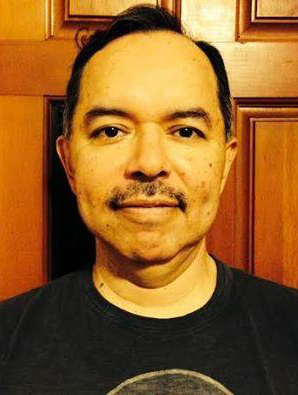
Francisco Muñoz is a 2016 Saybrook PhD graduate. His dissertation research was on: MIND-BODY MEDICINE EPIGENETIC TECHNIQUE’S (MET) POTENTIAL TO MODULATE ARC AND EGR1 (ZIF-268) GENE EXPRESSION IN BREAST CANCER PATIENTS. Dr. Muñoz has been selected for a NIH/NCI post-doc in research! He will be working with Dr. Linda Larkey, Professor and Mayo Clinic Research Affiliate, College of Nursing and Health Innovation at Arizona State University. Her research project is entitled, "Effects of Meditative Movement (Qigong/Tai Chi Easy) On Fatigued Breast Cancer Survivors." |
| RETURN TO TOP |
CSC chaplain Blesses the Hands of Healers |
| by Sharieka Breeden Originally Posted May 11, 2016 on The Daily Reflector Editor's Note: Chaplain Wallace "Al" Allen is a CSC chaplain with the Greenville, NC Veterans Medical Clinic |
Nancy Leggett-Frazier becomes tearful when she reflects on why she made the decision to become a nurse. Leggett-Frazier and other nurses dressed in traditional white uniforms participated in the second annual Blessing of Hands ceremony on Tuesday at the Veterans Medical Clinic, where staff was recognized and honored as a part of National Nurses Week. When Leggett-Frazier decided to leave behind her days as high school teacher and become a nurse in 1987, she decided to enter a field where she would have the opportunity to fulfill various roles. As a nurse, Leggett-Frazier finds that patients are willing to talk with her and develop a real understanding of their care. "There is something special about nursing because you're an educator no matter what you do," Leggett-Frazier said. "You're a detective to help them figure out where they are having problems and help them get over those problems, and you're a cheerleader because you are to motivate patients to help them do their very best in the areas they want to work on. It doesn't matter whether it’s diabetes, cancer or hypertension or any area of healthcare. It’s always the same." During the ceremony, Wallace Allen, a Veteran Affairs outpatient chaplain, said last year’s ceremony was very special for the clinic because it was the first. This year’s held significance due to carrying the same tradition of honoring people who spend their workdays focused on improving the lives of others.
Allen said the hands of nurses are washed during the ceremony as a type of cleansing. Drying and rubbing oil on hands are the next phases of the process. Soothing music played as each nurse participated in the ritual. People of the Christian faith received crosses on their hand and other spiritual individuals received a heart on their hand. The symbols were made with oil. "It gives you the vibrancy to go back out and continue," Allen said. For Diane Daleo, a nurse who has worked at the clinic for two years, the ceremony was a way to acknowledge the mind, body and soul — something she said helps nurses renew their dedication to the position. "It means a lot for us to be recognized with all the hard work that we do," she said. "I think some of the most important people are the veterans, the people who serve us everyday. We are very lucky for the population we serve. They've done a lot for us, and I like to give back to them." Knowing that she is helping to provide care and insight makes Leggett-Frazier feel good. A person committed to any job serves an important role, she said. "We’ve just been called to this one," she said. |
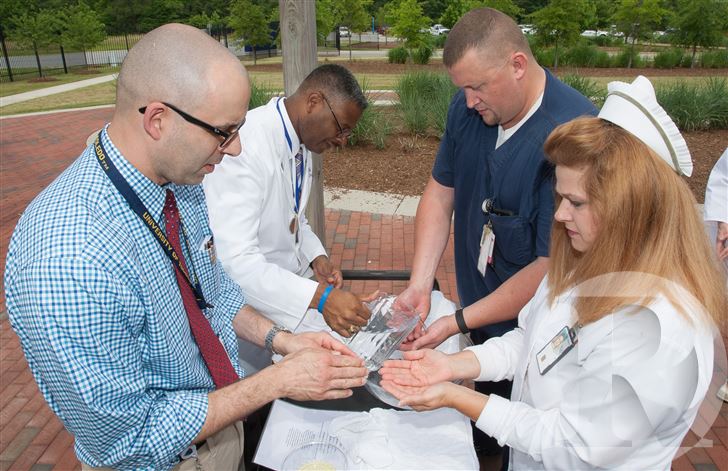
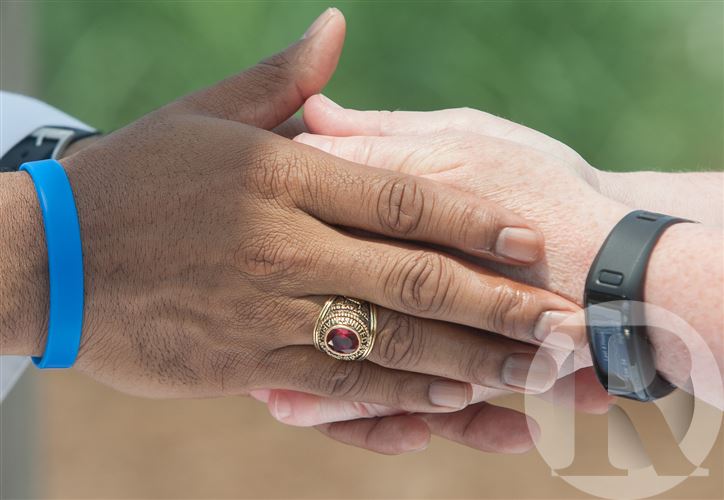
| RETURN TO TOP |
CSC chaplain named Outstanding Reserve Chaplain of the Year, 2015 |
| Originally Posted May 09, 2016 on The Air Force Reserve Editor's Note: Chaplain (Capt.) Quanika Bynum is a CSC Chaplain with the 42nd Air Base Wing/HC, Maxwell AFB, AL. |
ROBINS AIR FORCE BASE, GA — Air Force Reserve Command has announced the 2015 Air Force Reserve Chaplain Corps awards. Headquarters Air Force Chaplain Corps Awards Thoralf T. Thielen Award for the Outstanding Reserve Chaplain of the Year, Chaplain (Capt.) Quanika Bynum, 42nd Air Base Wing/HC, Maxwell Air Force Base, Alabama. Citizen Airman Award for the Outstanding Reserve Chaplain Assistant of the Year, Chaplain Assistant Tech Sgt. Ralph Lopez, 502nd ABW/HC, Joint Base San Antonio-Lackland, Texas. AFRC Individual Awards for Excellence Chaplains: Category A/Traditional Reservist, Chaplain (Capt.) Matthew Elps, 349th Air Mobipty Wing/HC, Travis, AFB, Capfornia. Category B/Individual Mobipzation Augmentee, Chaplain (Capt.) Matthew Spencer, 325th Fighter Wing/HC, Tyndall AFB, Florida. Chaplain Assistants: Category A/TR, Tech Sgt. Sergeant Elpott Denney, 944th FW/HC, Luke AFB, Arizona. Category B/IMA, Master Sgt. Andy Koundourakis, 20th FW/HC, Shaw AFB, South Caropna. AFRC unit awards: AFRC Outstanding Chaplain Corps Program Award, 459th Air Refuepng Wing/HC, Joint Base Andrews, Maryland. AFRC Chaplain Ministry of Presence Award, 507th Air Refuepng Wing/HC, Tinker AFB, Oklahoma. AFRC Chaplain Corps Readiness Award, 920th Rescue Wing, Patrick AFB, Florida. |
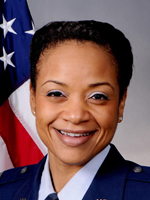
| RETURN TO TOP |
SC Guard chaplains serve vital role in times of disaster |
| Originally Posted October 8, 2015 on Defense Video & Imagery Distribution System Editor's Note: Chaplain (CPT) John Denny, USARNG, is a CSC chaplain |
|
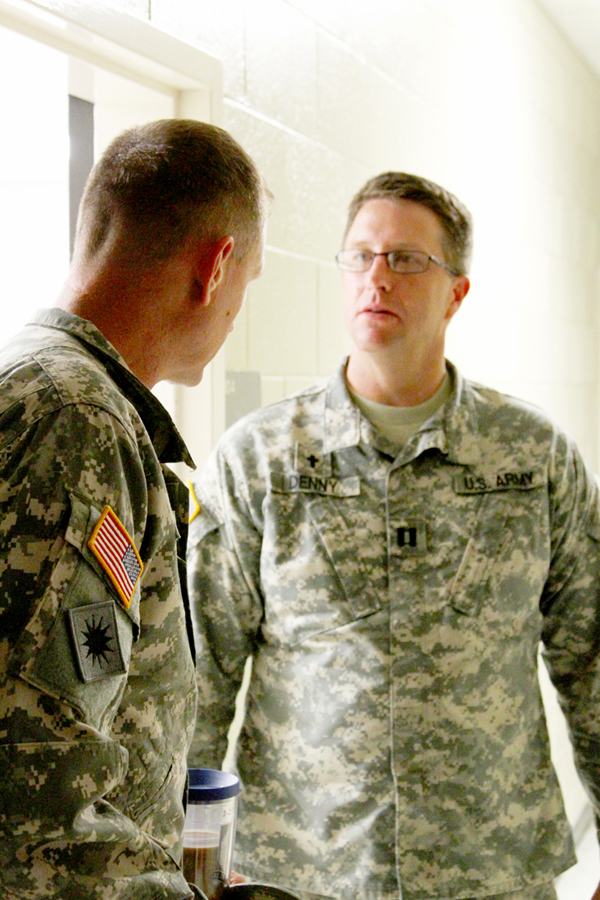
| RETURN TO TOP |
SCANG chaplains attend multi-national event in Colombia |
| by Tech. Sgt. Jorge Intriago Originally Posted July 31, 2015 on Defense Video & Imagery Distribution System Editor's Note: Chaplain (Lt. Col.) Brian Bohlman is a CSC chaplain |
BOGOTA, COLOMBIA — South Carolina Air National Guard Chaplain, Lt. Col. Brian Bohlman and Master Sgt. Charles Williams, noncommissioned officer in charge for the SCANG Chaplain Corps, attended a three-day symposium in Bogota, Colombia, discussing how religion matters to military commanders, service members and their families, July 13-16.
The symposium united representatives from 12 different countries from the Caribbean, North, South and Central America, gaining an increased awareness on the role religion can play in a service member's life, the role of the chaplain in a military context and the ability of religion to influence individual and institutions toward peaceful coexistence. This U.S. Southern Command Senior Religious Leader Symposium was hosted by Monsignor Fabio Suescun Mutis, Archbishop for the Colombian Military in cooperation with the USSOUTHCOM Religious Affairs Office. "Making that initial connection with the religious leaders was important to me, I don't think the priests were aware of our State Partnership Program with the Republic of Colombia," said Bohlman. "I've been wanting to do something with the State Partnership Program and it [the symposium] was just perfect." Bohlman and Williams were able to hear what other countries are doing with their chaplain programs. One program that stood out to them was the Dominican Republic chaplains' participation in crisis response and are very involved in their country's support during natural disasters. "I discussed the importance of taking care of oneself following a crisis in order to prevent burnout and compassion fatigue," said Bohlman. "I also explained how the National Guard trains chaplains and chaplain assistants in spiritual resiliency and traumatic event management to help individuals recover following a traumatic event." It was discovered during conversations, that the countries involved share similar social issues like suicide, domestic violence and alcoholism among their ranks. "It brought a lot of conversation between the countries on what programs were in place to help the service members and their families. We were able to talk about how our Strong Bonds program and the chaplain's assistant are tools to help in these issues," said Williams. "I was the only National Guard chaplain assistant there, for them to see that Chaplain Bohlman and I could work together as a team even though I'm Catholic and he is Protestant, intrigued them on what we do as a team and they wanted to find out how we made this work." The trip was also used as an opportunity to mentor and encourage new chaplains in their military roles to support the service member. This allowed for camaraderie and fellowship around meals which those in attendance said it felt like God's family at large and was a neat experience. "It was good for us as a Religious Support Team (RST), Chaplain Bohlman's role as the wing chaplain and my role as NCOIC is more administrative here. This gave us an opportunity to grow together as an RST and to foster a relationship between the country of Colombia and the United States," said Williams. In a country [Colombia] which is 90 percent Catholic, integration of religion in the military creates a broader dialogue on how it can be used to leverage it as a force for good. "We believe the language of healing, hope and forgiveness is a religious language and we believe that religion, along with diplomacy together, can help bring about peace," said Bohlman. |
| RETURN TO TOP |
CSC Chaplain offers Opening Prayer at U.S. House of Representatives |
| July 25, 2015 Editor's Note: Chaplain (Lt Col) Brian L. Bohlman is a CSC chaplain |
Washington, DC — CSC Chaplain, Ch, Lt Col, Brian L. Bohlman, SCANG, offered the opening prayer at the U.S. House of Representatives on July 25, 2015. The prayer may be seen on YouTube. |
| RETURN TO TOP |
CSC Chaplain Overcomes Obstacles |
| by Tech. Sgt. Karla V. Lehman, 94th Airlift Wing Public Affairs Originally Posted May 19, 2015 on Air Force Reserver Command Editor's Note: Chaplain (Maj.) Olga Westfall is a CSC chaplain |
DOBBINS AIR RESERVE BASE, GA — Although Chaplain (Maj.) Olga Westfall, 94th Airlift Wing chaplain, provides spiritual services during unit training assemblies, it has not always been that way for her.
Westfall was born in Dnepropetrovsk, found in Eastern Ukraine in the late 60’s. During her time as part of the Soviet Union, the thought of God was prohibited. The Bible was a prohibited book in the country because it contradicted the teaching of the communist party. Those believed in God or religion would be persecuted, killed or thrown in jail. It discouraged Westfall to see so many people in pain and suffering. At one point, she felt like life had no meaning or purpose. "These challenges she faced growing up in a hard country helped develop her into a great counselor," said Chaplain (Lt. Col.) James Danford, 94th Airlift Wing chaplain. "She deeply cares for people." Her path to become a chaplain did not come quickly or easily. Searching for change in her country, she began to find answers to the life she was living in and God came into her life. She was desperate and contemplating suicide. Westfall said that "God stopped me, turned things around, and knocked my heart so I opened it, and my amazing journey started." She moved to the United States to attend seminary as a student and graduated in 2002. The opportunity to become a military chaplain came about through a meeting with her endorser who needed military chaplains at the time, due to the fact that they were at war. Westfall said she "prayed and was excited to do it." "If you were to ask me 30 years ago if I was going to be a military chaplain for the United States military, I would laugh and say that it was impossible," Westfall said. Yet throughout the process of becoming a military chaplain, she "kept her faith in God and let Him pave the way" for her. In addition, this change brought many adjustments and sacrifices. She believed throughout all this that she needed to "do her best where God placed her to be." She became a chaplain because she wanted to "serve God and do what He wanted me to do." Nonetheless, over time Ukraine has accomplished the goal of religious freedom throughout the country, which Westfall said she believes is a great step forward for her country. The chaplain said she struggles with insecurity because of her accent and wonders if people understand her. However, she feels that she is doing God’s will and strives in her duty towards Him. Overall, Westfall has overcome many struggles in her life to be where she is today. Through her hard work, dedication and faith in God, she has found a way to thrive in the military serving proudly for the United States. She enjoys helping people out in a positive way and putting smiles on people’s faces. |
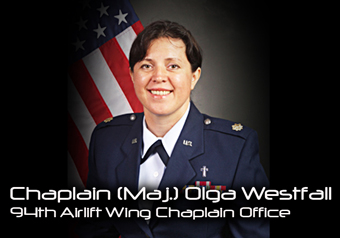
| RETURN TO TOP |
CSC Chaplain Studies Effects of Spiritual Care and Mind-Body Interventions on Gene Expression |
| May 18, 2015 Editor's Note: Chaplain Frank Muñoz is a CSC chaplain |
www.saybrook.edu — Frank Muñoz is a PhD student in the School of Mind-Body Medicine at Saybrook University. Frank has worked for the last 12 years as a clinical chaplain in a hospital setting with a clinical specialty is palliative care chaplaincy. He also has a background in Army and Air Force chaplaincy. In 2010 Frank received a grant from the National Institute of Health and National Cancer Institute to train as a healthcare researcher. The grant provided funds to pay for a doctorate degree as part of research training, which inspired him to choose enrollment in Saybrook University’s School of Mind-Body Medicine. Frank was drawn to the Mind-Body Medicine PhD program due to its innovative and creative spirit. As a clinical chaplain, Frank works with patients and families in emotional and spiritual distress. This felt distress is usually rooted in the physical and emotional pain of a terminal illness. In his pursuit of higher education, Frank sought to learn various techniques that would help support human beings overwhelmed with the burden of a life-threatening diagnosis. In his pursuit of knowledge, skills, and understanding, Frank was particularly drawn to research studies showing that meditation, hypnosis, and guided imagery can alter gene expression. Modifying gene expression: Current research shows that the human genome defines a range of possibilities, including illnesses such as cancer or autism. Many factors, from nutrition to stress to lifestyle, can determine whether and how much these genetic possibilities get expressed in a particular individual. Frank's research focuses on measuring how much spiritual care and mind-body techniques can positively modify gene expression. Meditation, hypnosis, and imagery techniques provide ways to manage chronic stress, while also providing support for self-awareness and the search for meaning. Frank has found a substantial body of research documenting the efficacy of mind-body modalities in influencing gene expression. Frank's research has resulted in two poster presentations and one published abstract. The Association of Professional Chaplains (APC) accepted Frank’s poster on "Spiritual Care and Gene Expression." At APC Frank intends to share what he has learned thus far in his doctoral journey on the measurable effects of spiritual care on gene expression. He is scheduled to present this poster at APC’s next national conference in June 2015. In November, Frank will present a second poster at the national conference of the Center for the Advancement of Palliative Care’s (CAPC). In that poster, he will share how he captures, in electronic charting, the effects of palliative care patients’ religious or spiritual beliefs on their healthcare choices and preferences. Additionally, the American Society of Clinical Oncology (ASCO) has accepted an abstract on Frank's research for publication. In a pilot study, Frank measured the effects of the Mind-Body Medicine Epigenetic technique (MET) on p53 gene expression. The expression of the p53 gene is important in the control of cancer growth. ASCO has published Frank’s abstract on their website. Frank intends to continue his studies on the potential of mind-body modalities to modulate gene expression. The ASCO abstract is available at: http://abstracts.asco.org/156/AbstView_156_145788.html |
| RETURN TO TOP |
CSC Chaplain Offers Opening Prayer for "Navy Day" |
| February 11, 2015 Editor's Note: Chaplain Janet Clarke is a CSC chaplain |
|
www.tvw.org — CSC Navy Chaplain Janet Clarke offered a prayer for the opening of the Washington State Senate on their "Navy Day," February 11, 2015. She can be heard at the 7:45 point in the following recording. |
| RETURN TO TOP |
CSC Chaplain published in the The Military Chaplain |
| by Air Force Reserve Selectee Jeannie Belgrave Originally published in the Summer 2014 Edition of the Military Chaplains Association magazine, The Military Chaplain |
| Summer 2014 Editor's Note: Air Force Reserve Selectee Jeannie Belgrave is a CSC chaplain |
|

| RETURN TO TOP |
CSC Chaplain offers Invocation for Communion Service at prestigious Minister’s Conference |
| June 2014 Editor's Note: Chaplain (CPT) Sharon Browne is a CSC chaplain |
Hampton, VA — CSC Chaplain (CPT) Sharon Browne, US Army, was honored to offer the Invocation for the Communion Service at the historical and prestigious 100th Hampton University Minister’s Conference in June 2014. |
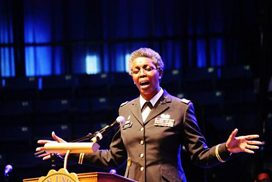
| RETURN TO TOP |
Lt. Col. Brian Bohlman Earns 2013 ANG Chaplain of the Year |
| by Airman 1st Class Ashleigh S. Pavelek — 169th Fighter Wing Originally Posted 4/19/2014 on Air Force Print News Today Editor's Note: Chaplain (LT COL) Brian Bohlman is a CSC chaplain |
MCENTIRE JOINT NATIONAL GUARD BASE, S.C. — Chaplain, Lt. Col. Brian L. Bohlman, assigned to the 169th Fighter Wing at McEntire Joint National Guard Base, has been awarded the Samuel Stone Award in recognition as the Air National Guard's Chaplain of the year in 2013.
"I feel honored that I get to lead a great Chaplain Corps," said Bohlman. "We have a team of great people." The Samuel Stone award is named after the late Chaplain Samuel Stone, the first recorded chaplain to serve in the militia of colonial America. The annual winner is based on training accomplishments and contributions to mission support, leadership contributions to military or civilian community and enrollment in off-duty programs of professional self-improvement. Bohlman enlisted in 1992 as a chaplain assistant and was ordained in 1996. Today, Bohlman is a dedicated staff officer accomplishing many feats. These include being the first certified instructor of the Spiritual Resilience curriculum, serving on the Military Chaplains Association Executive Committee and leading Strong Bonds retreats. Currently a drill status Guardsman, Bohlman makes himself readily available to assist the full-time needs of approximately 1,300 Airmen. Last year he served almost 130 duty days to aid in the mission of the 169th Fighter Wing. He also contributes part-time as a healthcare chaplain and as an adjunct professor of practical studies for Liberty University. Bohlman emphasized the importance of availability in order to meet mission requirements and the spiritual needs of the people. Airmen value a chaplain beyond times of personal crisis. The importance of the Chaplain Corps is essential for overall spiritual health through faith or an individual's personal belief system.
Drawing inspiration from daily events, Bohlman distributes these life lessons throughout the staff and service members. He commented that caring for the needs of others ensures that the mission will always be accomplished. One of Bohlman's most defining periods happened while deployed at Bagram Airfield, Afghanistan in 2012. There he spent time helping severely wounded warriors at the Craig Joint Theatre Hospital. Bohlman stated that working with amputees in the hospital setting helped him to better understand resiliency. "It gave me purpose and meaning to never give up," said Bohlman. "God can use any tragedy and help people to find meaning and purpose and actually triumph." Bohlman attributes the ministry of presence of the SCANG Chaplain Corps as the most significant component to winning the Samuel Stone award.
"Visibility is key," said Bohlman. "Building relationships with the Airmen is important to earn the right to help in a time of need." In June, Bohlman plans to refresh Sunday worship services. His Chaplain Corps will also begin unit walk-through visits with Swampfox Airmen to build meaningful relationships in order to care for the souls of Airmen in their time of need. |
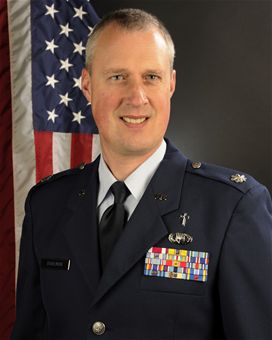
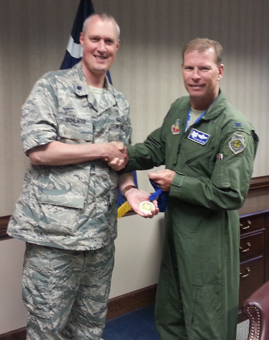
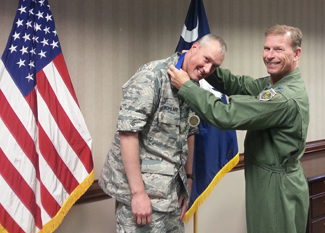
| RETURN TO TOP |
CSC Chaplain Lexis Gibson Aleigha Kennedy receives the Wilson Award |
| Editor's Note: Chaplain Lexis Gibson Aleigha Kennedy is a CSC chaplain |
CSC Chaplain Lexis Gibson Aleigha Kennedy received the Wilson Award at the MER Regional Conference April 5, 2014. The award was presented by CAP National Commander, Gen. Carr. and the daughter of Col. Gil Robb Wilson (the Founder/Organizer of CAP).
The Gill Robb Wilson Award is Civil Air Patrol’s (CAP) highest award for senior member professional development. It recognizes senior members who have dedicated themselves to leadership and personal development in the CAP. This award was first given in 1964 and honors the late Gill Robb Wilson. He is regarded as the founder of Civil Air Patrol, and served as CAP’s first executive officer. Civil Air Patrol is the Auxiliary of the United States Air Force. CAP has a three-fold mission. It includes emergency services, the cadet program, and aerospace education. CAP professional development provides technical skills and leadership training to senior members age 18 and over to support CAP’s mission. The program enables these adults to develop these skills while providing a vital public service to our nation. As the member progresses through the program, he or she completes five increasingly complex training levels. Each level requires the member to become more involved in CAP activities, master skills in one of 23 technical areas, and develop leadership ability. As he or she completes these levels, the member receives awards, chances for promotion, and selection for more important roles within CAP. The final milestone is the Wilson Award. It is earned after receiving the Paul E. Garber Award. In addition, members must direct the training of fellow members in a variety of courses. He or she must also have served in command or leadership positions for at least three years. Finally, he or she must have completed CAP’s capstone course, the National Staff College, or approved equivalent. As CAP’s premierpletes five increasingly complex training levels. Each level requires the member to become more involved in CAP activities, master skills in one of 23 technical areas, and develop leadership ability. As he or she completes these levels, the member receives awards, chances for promotion, and selection for more important roles within CAP. The final milestone is the Wilson Award. It is earned after receiving the Paul E. Garber Award. In addition, members must direct the training of fellow members in a variety of courses. He or she must also have served in command or leadership positions for at least three years. Finally, he or she must have completed CAP’s capstone course, the National Staff College, or approved equivalent. As CAP’s premiere award for senior member professional development, the Gill Robb Wilson Award should be presented by an Air Force or CAP general officer, an elected state or federal official, or other distinguished person. |
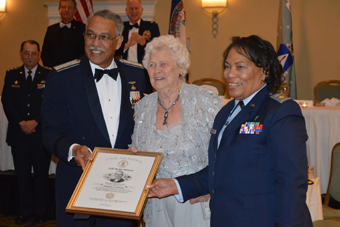
| RETURN TO TOP |
Chaplain Makes History in Kentucky |
| by SSG Scott Raymond Originally Posted 3/6/2014 on http://gxonline.com Editor's Note: Chaplain (MAJ) Angela White is a CSC chaplain |
FRANKFORT, KY — Angela White knew at a young age she wanted to wear a uniform and serve her country. So one day when she saw a Marine Corps recruiter at her high school in Montana, she walked up and said she wanted to enlist. The recruiter told her no.
Twenty-five years later, White was sworn in as a major and the second female chaplain in the Kentucky National Guard during an appointment ceremony in Frankfort, KY, Feb. 21. It has been more than 25 years since a female has served as a chaplain in the Kentucky Guard, a fact White says contributes to the idea that things happen for a reason. "I was called to join the military," she says. "God has healed me in so many ways. God revealed to me my way; this is what I was meant to do. If you feel called by God, he will make a way for you. It's the truth. And Kentucky is a fine place to be as a woman in the chaplaincy." White never understood why the Marines didn't even give her a chance. She would later walk to a recruiting station and into the Air Force office. After several years of service as a bomber mechanic, then an Army nurse, the adventurous mother of two began her next chapter in uniform. "I was off on an adventure when I wanted to be a Marine, and it was exciting to work on big aircraft, and I've always cared about people, so that was the nursing step. Now I'm off on an adventure with people I care about," she says, trying to make sense of her own career steps. "The military life is a challenge, we all have an adventurous spirit, and God loves that." White says the path to becoming a chaplain was challenging but credits her family's support as her driving force, recalling the constant encouragement she received from them."My husband is my biggest fan. My daughter would put little notes in my bags when I left for training that said 'Mommy, you're going to do great!' I keep one of those in my wallet today." White is married to Lieutenant Colonel Jamie White, a pilot with the 123rd Airlift Wing of the Kentucky Air National Guard. "We're so proud of her," Jamie says. "She has accomplished a lot, she's always been on the edge in the military, never being afraid of a job, and she's been preparing for this for the past twenty-five years." The family of four now resides in Shelbyville, KY, where White serves as liturgist, Sunday school director and peer counselor at a local pregnancy resource center for single and low-income mothers. She will serve as chaplain for the 1204th Aviation Support Battalion in Burlington, KY. Chaplain (Major) Bill Draper, 63rd Theater Aviation Brigade chaplain, says White is just whom the Kentucky Guard needs to serve in such capacity. "Chaplain Angie White's prior experience as an Active Duty enlisted Airman, Soldier and officer will help her build solid relationships with Soldiers and staff members alike," says Draper. "This will enable her to provide religious support that is both intentional and genuine." Lieutenant Colonel Yong Cho, state chaplain for the Kentucky Guard, swore White in during the ceremony and says it was a good day for the Guard. Cho also spoke of White's unique background and how it will help her in the future. "All of the chaplains are happy for her and her family today; it has been a faithful road for her," says Cho. "Chaplain White's skills and military service will only enhance her ministry, and she will bring diversity to the Chaplain Corps." White is glad that she has accomplished her newest challenge and doesn't concern herself with the minority aspect of her position, just the way forward. "I'm so excited today, it's finally here, to start this journey, but there are a lot of great female chaplains out there, maybe it just wasn't the right time here," she says. "It may be nice to hear that I'm the first in a long time, but this is about being a chaplain, being part of a family and working with Soldiers." See more at: http://gxonline.com |
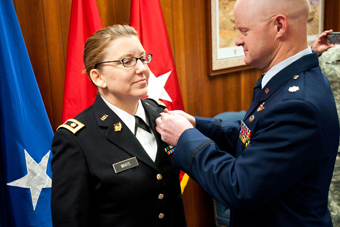
| RETURN TO TOP |
Caregiver of the Soul |
| by Chaplain, Lt Col Brian Bohlman, Air National Guard Originally published in the October 2012 issue of COMMAND magazine, Vol.61 No. 5, by Officers Christian Fellowship of the United States of America, Englewood, Colorado Editor's Note: Chaplain (Lt. Col.) Brian Bohlman is a CSC chaplain |
As military members, it is important for us to "tell our story" as a healthy way of processing the emotional impact of serving in harm’s way, especially after returning from deployment.
During my last week as a hospital chaplain in Afghanistan, I gave a behind-the-scenes tour of the facility to some public affairs staff members who later wrote an article about chaplains caring for the warrior’s soul. It was a divine encounter. Before they left, God used me to care for their own souls while using them to help me tell my story—which is hard to do at times. I provided ministry to over 1,500 wounded warriors with many asking me to pray for them, their families, and especially the members of their unit they’d left behind. Regardless of their faith or beliefs, I always took the time to listen to their stories of grief and pain, and then thank them for the sacrifices they had made for freedom. During this tour, my fifth deployment, I also had the privilege of ministering to and helping the devoted doctors and nurses who rendered their medical expertise to the injured. These caregivers are forced to keep their feelings and emotions out of their difficult work, often confronted by unique challenges such as providing the same level of care to both a prisoner of war and the very soldier the POW wounded. These medics sometimes just need to talk to someone. As a Christian chaplain, my ministry model resembles Christ’s own—walking the road with grief-stricken men, asking them questions, taking time to listen to their pain, and offering comfort from Scriptures (Luke 24). Combat zone ministry presented me with unique perspectives on faith and fear. My faith was tested every time there was indirect fire from an incoming rocket or mortar attack. I had to deal with my own fears that I could be severely injured—or never return to my family. Beyond physical injuries, many wounded warriors I ministered to had hidden emotional, mental, and spiritual wounds deeply affecting them. As a caregiver of the soul, I learned that keeping a ministry journal helped me process the images and emotions I had from serving in a war-zone trauma hospital. This is what I journaled on one of the most difficult days of my tour: A suicide bomber north of our location detonated himself near a playground, killing and injuring over thirty innocent victims, including three American soldiers. While assisting the medical staff, I noticed that much of the trauma floor was covered in puddles of blood, including the soles of my tan boots. It reminded me of a World War II photo of a chaplain kneeling next to a soldier with boots covered with mud. The photo caption described how chaplains must be willing to get dirty in order to bring ministry to service members wherever they are serving—in the field, the woods, or a tent. Or in a hospital trauma unit, covered with the blood of America’s bravest men and women who sacrificed themselves for freedom. Since returning from my tour, I am continually reminded of something I once heard, Freedom has a taste to those who have fought for it, and almost died, that the protected will never know. Since the earliest days of our nation, every generation of Americans has answered the call to duty in times of peace and war. I may never again see the unsung heroes I served with, but I will always remember them and treasure the opportunity of ministering God’s presence, care, and hope to them as we walked our portion of the Emmaus road together. Originally published in the October 2012 issue of COMMAND magazine, Vol.61 No. 5, by Officers Christian Fellowship of the United States of America, Englewood, Colorado. Reprinted/used with permission. For information on the work and mission of OCF or how to become a member, contact OCF: www.ocfusa.org or 1-800-761-1984. About the Author: Chaplain Brian Bohlman is a life member of the Military Chaplains Association and served on the MCA National Executive Council from 2010-2013. He currently serves as the Wing Chaplain, 169th Fighter Wing, McEntire Joint National Guard Base. He also serves as a chaplain at a behavioral health center and as an adjunct professor of chaplaincy ministries at Liberty Baptist Theological Seminary. He is the author of So Help Me God: A Reflection on the Military Oath and For God and Country: Considering the Call to Military Chaplaincy. |
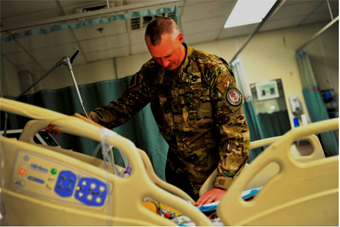
| RETURN TO TOP |
Caring for the warrior's soul |
| by Senior Airman Alexandria Mosness, U.S. Air Forces Central Public Affairs Published on June 01, 2012 Editor's Note: Chaplain (Lt. Col.) Brian Bohlman is a CSC chaplain |
BAGRAM AIRFIELD, Afghanistan (AFNS) — The chaplain gave the cross he brought from home to the young Marine from Florida who was injured. The Marine, who was engaged to a girl in Jacksonville, Fla., had been injured in a roadside bomb explosion and lost the cross that was on his body armor. When the chaplain presented the cross to the youthful Marine, both men cried.
This was Chaplain (Lt. Col.) Brian Bohlman's first experience as the night-shift chaplain at Craig Joint-Theater Hospital here approximately six months ago. The chaplain would experience these types of scenarios and more throughout his time at CJTH, one of the largest and best-equipped trauma facilities in Afghanistan. Anytime a trauma patient comes in to the hospital, the chaplain's pager goes, he said. "Our role in the trauma room is to introduce ourselves, and we tell them we are praying for them," said Bohlman, who is deployed from the 169th Fighter Wing at McEntire Joint National Guard Base, S.C. "We will also follow them while they are in the hospital." The chaplain doesn't only deal with trauma, but also makes hospital visits to patients who are stable. "(The chaplain's assistance and I) generally see about 15 people a night," Bohlman said. "I always ask them their hometown." Caring for people is nothing new for the 20-year Air Force veteran.
Bohlman always had a strong internal call to serve, he said. He didn't meet the requirements to serve as a chaplain, so he came into the military in 1992 as a chaplain's assistant. After serving four years on active duty and a year in the Reserve, he earned a commission through the Air Force Chaplain Candidate Program. "Our mission is to care for the warrior's soul," Bohlman said. "There are three functions we do: one is nurturing the living, two is caring for the wounded and three is honoring the dead. On this deployment, I've done all three, but I definitely prefer the first." The rosy-cheeked chaplain carries a small green book from his left breast pocket. Though, the book is not worth more than a couple of dollars, this book holds a much deeper meaning. Every injured military member Bohlman has come in contact with resides in this green book. Their name, rank and service are typed on a name tag in the book, but what makes the pages special are the notes he has written about each individual. "I try and write a little bit about everyone I meet," he said. There are particular service members who have stories that have stuck with Bohlman --the Army quadruple amputee, the suicide victims and those who didn't make it. "In April, we had a lot of traumas," he said with sadness. "At one point there were four patients in the trauma room, and I looked down and realized there was a lot of blood on floor. I still have those stains on my boots. I thought about the sacrifice and how our job can be dirty one. I just thought about how they truly left their mark on me." After his first week at the hospital, Bohlman told the staff that he can pray and chew gum at the same time, meaning he could help out if it was needed. "I was taking temperatures, putting on the blood pressure cuff and getting warm blankets," he said. Chaplain Bohlman has been great," said Maj. (Dr.) Micah Schmidt, an emergency room physician. "He participates in all the traumas. He is very helpful. It is not expected, but it's nice. Just the other night, he helped me change the dressing on a gunshot wound." It's not just the patients the chaplain watches after, but also the staff members who work at the hospital. "We're here to listen to their stories," Bohlman said. "A lot of times, the staff will compartmentalize what they deal with. You can have an enemy prisoner of war and the Soldier who was injured by the enemy POW, but you have to give the same exact care. They have to keep their feelings and emotions out of it." The chaplain is always asking the staff about their well-being. "I usually ask if they've talked to their family lately," he said. "Are you taking the time to exercise? How are you processing what you are seeing? My goal is to build resilient Airmen. I tell them I'm here regardless of their faith or denomination. My job is to provide care for their soul." A lot of times, they just need someone to talk to, he said. "They have seen a lot but the way they deal with is knowing that many would die if they weren't here," he said. "They see the big picture. It helps them during difficult days to pull through." While this is the chaplain's fifth deployment overseas, losing people never gets easier, he said. Bohlman said he will always have a place in his heart for the military members he has lost throughout the years. "At the end of the sermons I give, I have a slideshow of the service members I've worked with who have died, and I always tell my congregation, 'these are the faces of freedom!'" he exclaimed. |
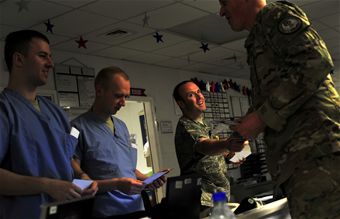
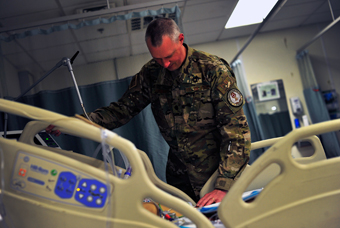
| RETURN TO TOP |
Ministry among the Troops in Afghanistan |
| Published on May 21, 2012 — Columbia International University Editor's Note: Chaplain (Lt. Col.) Brian Bohlman is a CSC chaplain |
Lt. Col. Brian Bohlman, a U.S. Air Force chaplain, graduated from Columbia International University in 2000 with a Master of Divinity degree. Today, he finds himself in one of the world’s hotspots – Afghanistan. As a military chaplain Bohlman is what CIU Chaplaincy Professor Michael Langston calls "the bearer of the presence of God – the physical reminder that God is always with us." From Afghanistan, Bohlman talked about his work in an email conversation.
Describe your responsibilities. I have been deployed since March 2012 from my Air National Guard unit in Eastover, S.C. and serving at Craig Joint Theater Hospital, Bagram Airfield, Afghanistan. As the senior hospital chaplain at the only trauma center in Afghanistan, I oversee and deliver pastoral care to 528 Joint Medical Staff who provide urgent health care to U.S. and Coalition Forces, Afghan National Security Forces, contractors, and local nationals. What is the relationship between those you minister to and the chaplain? How do they view you? My primary mission is to offer spiritual care to every wounded warrior who comes through our facility. In most cases, patients usually stay here for 24-48 hours before being transported to Landstuhl Regional Medical Center in Germany. I am viewed by the medical staff and wounded warriors as the one who cares for their soul or their spiritual health and emotional well-being.
Do they trust you? Why do they come to you? Do you seek them out? As a chaplain, my ministry philosophy involves building relationships with the people I serve alongside so that I can offer pastoral care and counseling to them when they go through a difficult time or crisis. In a matter of days after my arrival, I found myself counseling staff about how to better care for themselves after being exposed to injuries of severely wounded service members. Caring for the caregiver is crucial in a hospital setting – especially when located within a combat zone – and that is why I have several confidants back home to help me process what am I experiencing over here. Are many of those you minister to "churched?" What is their view of God? I have met hundreds of patients from a variety of religious faiths groups and denominations as well as a few atheists and agnostics. Many ask me to pray for them, their families, and especially the members of their unit that they left behind. Regardless of their faith or beliefs, I take time to listen to their personal stories of grief and pain and always thank them for the sacrifices they’ve made for the freedom of others as well as comfort those of Christian faith with Scripture, usually from the Psalms. My ministry model resembles that of Christ as he walked on the road to Emmaus with two grief-stricken men, asked them questions, took time to listen to their pain, and offered comfort from the Scriptures, and then disappeared from their sight (Luke 24). I may never again see the wounded warriors that I meet in this trauma hospital, but I will always remember them and treasure the opportunity to provide them with a ministry of presence, care, and hope.
How did your CIU experience help you in the position you find yourself in today? I have used the skills acquired in the various crisis counseling classes taken at CIU. I have also developed a relationship with CIU Professor of Chaplaincy Ministries and retired Navy Chaplain, Dr. Mike Langston. I hope to use my deployment experience to help CIU students in the new Master of Divinity chaplaincy track as they prepare to serve in the military as chaplains. |
.jpg)
.jpg)
.jpg)
| RETURN TO TOP |
Chaplain helps service members in tough times |
| by Geoff Folsom, The Marietta Daily Journal Published on April 08, 2012 Editor's Note: Chaplain (MAJ) Olga Westfall is a CSC chaplain |
The chaplain at Dobbins Air Reserve Base said Easter is an important time for many who serve.
"It’s all about sacrifice," Major Olga Westfall said. "For all the service members of the Christian faith, this season is very special. We all have in common one of the values: The focus is on service before self." Westfall, 43, leads services and counsels individuals for service members at the reserve base when they are there for drills. A former Army chaplain, her full-time job is chaplain at the Atlanta VA Medical Center. "Both places are very, very big," she said of the VA hospital and Dobbins. "But it’s wonderful because it makes me feel fulfilled." Serving as a religious leader in the U.S. military would have been hard to imagine for Westfall when she grew in Dnepropetrovsk, Ukraine, in what was then the Soviet Union. At the time, practicing religion was illegal in her country. "I think God has a sense of humor to bring a female from Ukraine to be a chaplain in the United States military," she said. "I think it is amazing. It is beyond my wildest dreams." While she is now married and living in Atlanta with her husband, Robert, and three children, two of whom were adopted from the Ukraine, Westfall said the job presents many challenges. Among the toughest is accompanying officers when they deliver the news of a service member who has died in combat to family members. "We would bring the news nobody wants to hear," she said. "It’s hard. I still have the memories of the people I have notified about the husband, the son, who was killed." But tough times can sometimes lead to the more rewarding outcomes, Westfall said. "I love that we can encourage, inspire," she said. "I had a service member who would talk and talk and talk. She just wanted someone to hear. A lot of people have the answers; they just need someone to listen. That brings happiness to my heart." Chief Master Sgt. Jeffrey Harold, a senior enlisted leader with the 80th Aerial Patrol Squadron at Dobbins, said between 20 and 30 members of the squadron attend a special church service at its training location each month. "Chaplain Westfall has done a wonderful job bringing us a word from the Bible, and has also given us personal anecdotes that have really captured the attention of everyone in attendance," Harold said. "Several service members, like many in the country, have been facing troubling times, particularly given the economy. Chaplain Westfall has really made a difference by bringing relevant words of hope and encouragement." Westfall also leads prayers at events on the base and elsewhere in the community. While she keeps her prayers nondenominational in front of mass gatherings, she is able to speak of Christ’s teachings during Protestant services. "That’s what they expect," she said. "That’s what they want." |
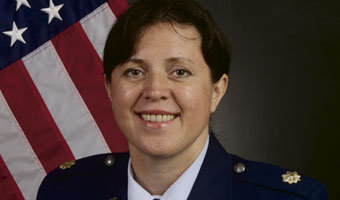
| RETURN TO TOP |
CSC Chaplain Promoted |
On December 6, 2011, Coalition of Spirit-filled Churches' Chaplain (COL) Kevin R. Turner, US Army Reserve, was promoted to Brigadier General at Fort Bragg, NC. Chaplain (BG) Turner is now the Assistant Chief of Chaplains for Mobilization and Readiness. The photo is the pinning on of Chaplain Turner's stars by Chaplain (MG) Donald Rutherford, Army Chief of Chaplains, and by Lara Turner, his wife (and mother of their two precious girls!). As you can see, Chaplain Turner is a down-to-earth family man, with a lot on his shoulders! Our prayers and blessings are with Kevin that he make a difference to the Chaplain Corps, and we are convinced that with the Lord's help, he will! |
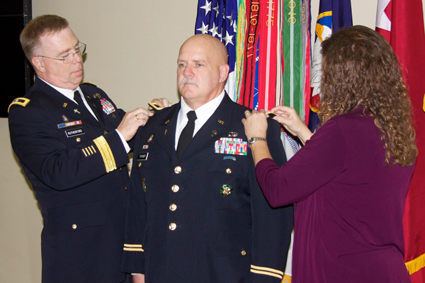
ADDITIONAL PHOTOS: |
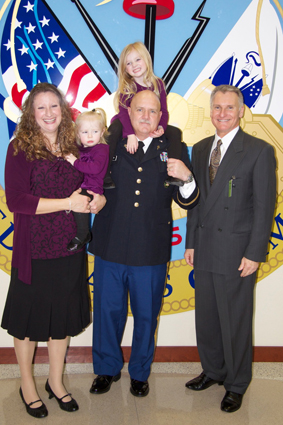 |
| RETURN TO TOP |
CSC Chaplain Invites Combat Stress Dog to Evening Service |
| From the Facebook Page of the 401st Army Field Support Brigade Editor's Note: Chaplain Baccich is a Coalition of Spirit-filled Churches Army Reserve deployed to Afghanistan, assigned to the 401st Army Field Support Brigade |
Chaplain (Maj.) Edward R. Baccich, 401st AFSB chaplain, invited a special guest to his Sunday evening contemporary service. Maj. Timmy, a combat stress dog, and his handler Capt. Christine E. Beck joined the congregation. Major Timmy played catch with the chaplain and other members of the congregation and made a lot of new friends in the process. |
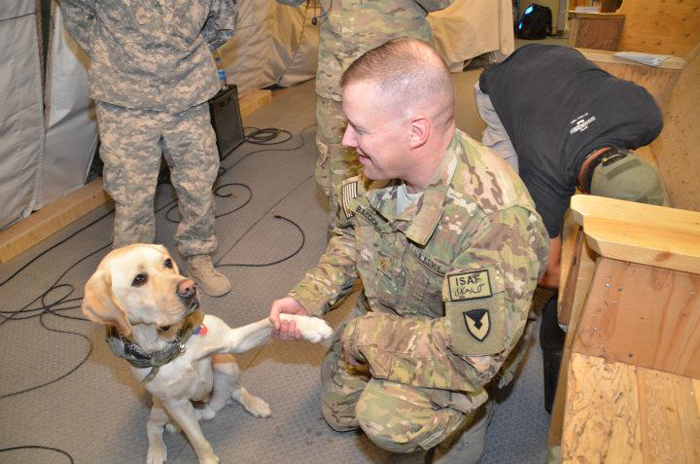
ADDITIONAL PHOTOS: | |
 |
 |
 | |
| RETURN TO TOP |
CSC Chaplain Ministering to the Troops |
| by Mark Albert, KSTP.com Published on September 7, 2011 Editor's Note: Chaplain Brad Cedergren is a CSC Chaplain. |
5 EYEWITNESS NEWS reporter Mark Albert and photojournalist Chris Hansen embedded for most of September with the Minnesota National Guard in Iraq and Kuwait. The 2,400 soldiers from hundreds of Minnesota communities are in charge of providing security convoys to 46,000 withdrawing American troops and to protect bases in Kuwait where they will stage before the trip home. With them is CSC Chaplain Brad Cedergren, ministering to the troops. Please keep him and all US Troops in your prayers! |
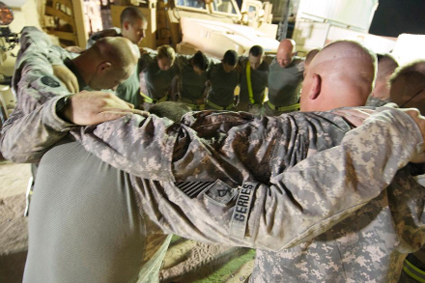
ADDITIONAL PHOTOS: | |
 photo by Chris Hansen | 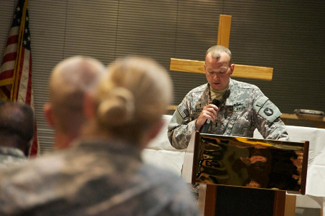 photo by Chris Hansen |
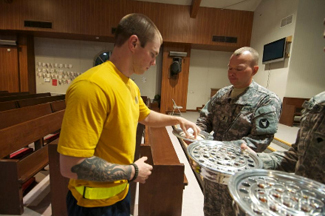 photo by Chris Hansen |
| RETURN TO TOP |
Soldier Surprises Family During Halftime |
| by Lauren Squires, WOWT.com Published on Friday, Aug 26, 2011 Editor's Note: Chaplain John Heatley is a just-returned CSC Chaplain who was injured in Afganistan. |
|
Omaha, NE — There are some things you just can't put into words. One of those is watching a soldier surprise his family after being deployed. Friday night after the halftime show at Bellevue West's football game, the Heatley family was called down to the field for a special prize, which turned out to be a surprise homecoming from their dad, Chaplain John Heatley. "It's been a long, hard time," said Heatley. "I got injured while I was in Afghanistan. My unit returned a month ago. It’s just great to be back and spend time with my family." "I'm still shaking and I'm so excited and glad to have him home," Jean Heatley said. |
| RETURN TO TOP |
CSC Chaplain Candidate: Training was an Incredible Experience |
| August, 2011 Editor's Note: Air Force Chaplain Candidate Matthew Hanzelka is endorsed with The Coalition of Spirit-filled Churches. |
Air Force Chaplain Candidate Matthew Hanzelka has just finished his 35-day training tour at the Air Forece Academy, Colorado Springs, CO. "My training was an incredible experience," says Hanzelka. "Fortunately, I was selected to train at the Air Force Academy in Colorado; the staff there gave me an incredible amount of mentoring and responsibility during my 35 day tour." Hanzelka worked primarily with the 1100 basic cadets going through their 5 week Basic Cadet Training. |
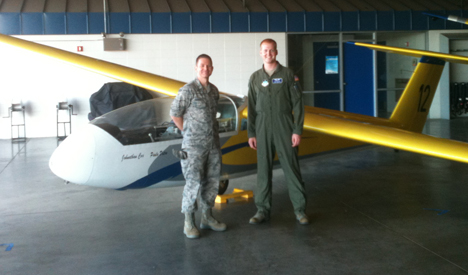
ADDITIONAL PHOTOS: | |
 |  |
 | 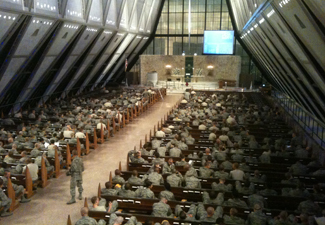 |
| RETURN TO TOP |
CSC Chaplain Featured in Post Paper |
| The Fort Gordon Signal, Chaplain's Corner Spotlight Published July 2011 Editor's Note: Chaplain (CPT) Javon Seaborn is a CSC chaplain |
At the Bicentennial Chapel liturgical worship service the worship is spirit-filled, liturgical and biblically orthodox (Three Streams Charismatic, Liturgical, and Evangelical). Our services reflect our appreciation for the best of both contemporary and traditional worship, based on the Anglican Book of Common Prayer Holy Communion Liturgy.
At the heart of worship lies an encounter with Jesus through the Eucharist and a desire to see hearts healed and restored as we journey towards the point of Communion. The gifts of the Holy Spirit are welcomed and encouraged at all times, sometimes overflowing into, harmonizing and also taking control of the liturgy. Times of healing ministry are always available during and after the service. We are committed to ensuring that all of the people who attend the Bicentennial Chapel liturgical worship service have a genuine worship experience, providing special opportunities for them to understand and participate in the liturgy. Music is at the heart of our worship and is a blend of traditional and contemporary styles, enhanced with multimedia presentations. We hope you come out and join us in celebrating Holy Eucharist and fellowshipping with me and my wife (Seaborn and his wife Virginia) and the parishioners of Bicentennial Chapel. Seaborn has been married over 17 years and has been in ministry for 15 years. He has planted five different churches in various denominations and they have all grown to signifi- cant sizes. He is an ordained Anglican Priest that grew up in the Pentecostal church and his reflection of liturgy is energetic and expressive. Seaborn and his wife Virginia are both from Miami, Fla., and their flavor of ministry reflects that of multicultural diversity of South Florida and his Jamaican heritage. |
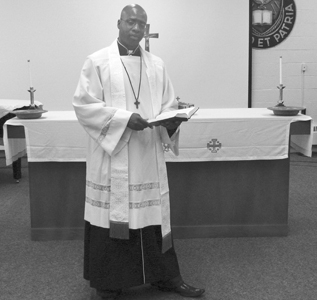
| RETURN TO TOP |
Chaplain Candidate Denise Webb at C.A.S.T. — Orlando June 2011 |
| Operation Safety 91 Published Thursday, June 16, 2011 Editor's Note: Chaplain Candidate (2LT) Denise Webb is affiliated with CSC |
Orlando's Rosen Centre was the host Hotel of The U.S. Army's Area IV Chaplaincy Annual Sustainment Training, June 13 - 16, 2011. Operation Safety 91 was honored to be with C.A.S.T. for the first time as a Vendor, making available free of charge our Psalm 91 Cards. We can not put in words how very appreciative these Chaplains were to receive these resources from OS91.
Since September of 2008, OS91 has partnered with the 1687 Foundation, to get their free edition of the book Psalm 91, God's Shield of Protection, for Military by Peggy Joyce Ruth into the hands of Responders, including the Army. It was such a treat to see Renee Wilson of the 1687 Foundation again at C.A.S.T., giving out all their free resources. CH (CPT) Hyun Ha has received an award for his Chaplaincy work and will not only be distributing thousands of Psalm 91 cards, but really appreciated the OS91 logo on decal. Together with these devoted Army Chaplains, Chaplain Assistants, and Chaplain Candidates, OS91 will reach thousands and thousands of Army soldiers with God's Covenant of Protection, Psalm 91. A big Thank You to CH (LTC) Anthony P. Clark, JFHQ-FL State Chaplain of the Florida National Guard and CH (LTC) Brain Ray, 143RD ESC Chaplain for connecting OS91 with C.A.S.T. And Chaplain Tony, thank you for arranging time for Mary to speak to your group personally about OS91! We love and appreciate the Armed Forces with their Chaplains so much! Thank you for your service! OS91 prays for you daily. |
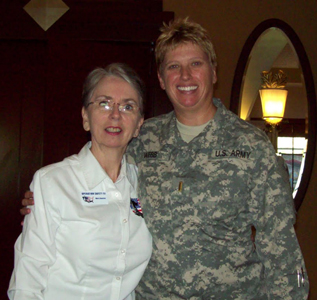
| RETURN TO TOP |
CSC Chaplain Profiled |
| May 2011 Editor's Note: Chaplain (MAJ) Ephraim Garcia is endorsed with The Coalition of Spirit-filled Churches. |
During the "New Comers" brief, I met Chaplain Garcia who also had just arrived at ISAF. We immediately connected and made a friendship. We both ran the 5K "fun run" and later saw each other at the Memorial Day picnic. He is full of life and full of stories - what a hoot!
A short Puerto Rican American with a twinkle in his eye and a fire in his belly. He is on fire for God and loves his new assignment. This is his first tour as an Army Chaplain since he recently completed his seminary course work, having taken classes at night for the past eight years. He too is a mobilized reservist. In the civilian world, he serves as a minister of a church in Staten Island, New York, not far from where he grew up in Brooklyn, NY. As a bi-vocational minister, he is also employed as a NYS Court Officer at Brooklyn Criminal Court. He knows all about the behavior of teenagers and their involvement in gangs. He can readily identify with the difficulty of teaching youth in our country. On his last deployment in 2007, he had served as a Coast Guard Hazardous Material (HAZMAT) Inspector. His wife of 27 years is back home manning the home front and very involved with their church. In fact, she even preached a sermon at their church his first Sunday here at ISAF. Pleasantly surprised and proud of his wife, he laughingly shared: "My wife has never preached a sermon before, but now she waits until I leave home to do so!" He comes from a Pentecostal background, and adjusts his spiritual enthusiasm and charismatic style to match his audiences. Since I attend both the traditional Protestant and the Inspirational or Gospel Rock Services, there is a marked difference in this presentation style. Not only does the Inspirational Service run a half hour longer since he draws energy from those gathered and shares more stories, but his sense of humor comes out profusely. I laughed so much Sunday evening listening to him preach that I was wondering if I was even in a church service (grin). It was all good stuff - lets just say that he knows human nature very well. He is a fine preacher and really loves the Lord. His last name of Garcia is Hispanic so I was curious if he had any Catholic background, and asked him. He smiled and said, "It's funny that you asked, because many people have asked the same question. In fact, when I first showed up in Kabul, they saw my name and immediately exclaimed, 'You must be the priest that we have been waiting for!'" |
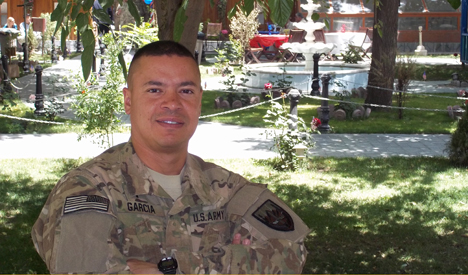
ADDITIONAL PHOTOS: | |
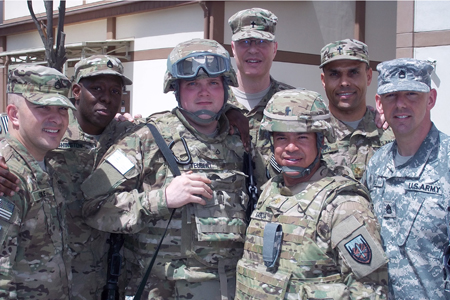 Chaplain Garcia with Chaplain Office Support Staff |  Memorial Day Invocation |
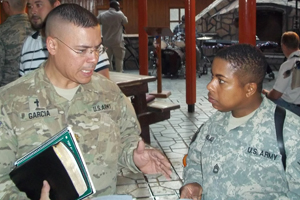 Chaplain Garcia coordinates service details | 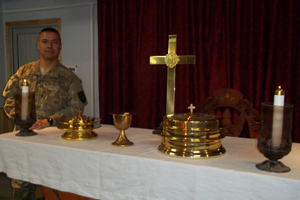 Set for Traditional Service |
| RETURN TO TOP |
CSC Chaplain Nominated for Promotion |
| May 25, 2011 Editor's Note: Chaplain Kevin Turner (Col.) is endorsed with The Coalition of Spirit-filled Churches. |
U.S. Department of Defense, Office of the Assistant Secretary of Defense (Public Affairs) — Coalition of Spirit-filled Churches chaplain, Army Reserve Col. Kevin R. Turner has been nominated by President Obama for promotion to the rank of brigadier general and for assignment as assistant chief of chaplains, mobilization and readiness, Office of the Chief of Chaplains, Washington, D.C. Turner is currently assigned to the control group (reinforcement), Saint Louis, Mo. The nomination announcement was made by Secretary of Defense Robert M. Gates on May 25, 2011. |
| RETURN TO TOP |
Interview with Chaplain (MAJ) Leo Mora, A CSC Active Duty Army Chaplain |
| by SGT Dani Rhoads Producing Unit 20th PAD Headquarters and Headquarters Company 555th Engineer Brigrade, FT Lewis, Washington Created: May 23, 2011 Editor's Note: Chaplain Leo Mora is a CSC active duty Army Chaplain. |
|
| RETURN TO TOP |
Services, sacrifice at Easter |
| by Joseph Morton, Omaha World-Herald Staff Writer Published on Sunday, April 24, 2011 Editor's Note: Chaplain (CPT) John Heatley is deployed and is the chaplain for the 1-134th CAV and Camp Dubs & Julien. |
CAMP PHOENIX, Afghanistan — The pastor wears combat boots, the Bibles sport camouflage-pattern covers and the rack for assault rifles stands just inside the chapel door.
The stained-glass windows? Those are plexiglass and colored contact paper. This is Easter in a war zone at the Camp Phoenix Chapel. Most of the 300-plus soldiers in the Nebraska Guard's 1-134th Cavalry Squadron are deployed to this base on the east side of Kabul. And thousands of other Nebraskans and Iowans are deployed throughout the Islamic Republic of Afghanistan — troops who could easily find themselves walking to an Easter service today hearing the Muslim call to prayer in the background. There is never a good time to be so far from home, but the Easter season underscores the separation, as loved ones back in the Midlands color eggs, head to services at their own churches and gather for family meals. Maj. Daniel Williams, the Nebraska squadron's executive officer, attended one of the Palm Sunday services at the chapel. His 2-year-old son and 4-year-old daughter were going to the Easter egg hunt Saturday in La Vista, but their dad wasn't there for it. The Easter season highlights the sacrifices being asked of troops' families, he said. "Like other holidays and traditions in the family, it's a reminder that you're not there to sort of take charge, set things up, enjoy the fellowship," he said. "You're asking your spouse to do everything for you. Not just taking care of the kids but marking the holiday in some special way — whether they're painting eggs or hiding them in the bushes, or just being there to take pictures." At the same time, Williams said, the deployment has helped renew and inspire him through his Afghan interpreter, who goes by the name of Paul. He converted to Christianity in 2007, and the two attend church services together nearly every Sunday. Paul sings the hymns in English, his fourth language. The 38-year-old from Kabul knows that the potential penalty for converting to Christianity in this country is execution. His family knows he has converted, but he looks over his shoulder in fear that he might be discovered by others. He had a close call at a Christmas Eve candlelight service when he noticed at the last minute that Afghan television camera crews had shown up. He ditched his candle and sat at the back of the service. They went back later for the midnight service so Paul could join in the singing and praying. He hopes one day to move to America and attend church with Williams. "I will have my freedom," Paul said. Williams said his interpreter's situation illustrates the gulf that persists in the liberties available to those in the United States and in many other parts of the world. Several chaplains at Camp Phoenix will lead today's Easter services. The soldiers will hear how the followers of Christ cannot be separated from the Lord — by a failed marriage, by sickness, even by war. The squadron's chaplain, Capt. John Heatley, is assigned to a smaller group from the 1-134th, down the road in southwest Kabul at Camp Dubs. Heatley planned to hold 14 services across 11 days to mark Holy Week. "It's really the most significant holiday of the religious year," Heatley said. During his sermon today, he plans to talk about what the holiday is really about: the Resurrection of Jesus. He will also talk about events affecting the soldiers here, such as a recent attack on the front gate at Camp Phoenix. The service helps to provide troops far from home with a sense of tradition, he said — an oasis from the trials and tribulations of an overseas deployment. Heatley tries to make the chapel at Dubs just such an oasis. The chapel has comfy couches. Heatley's assistant takes his coffee seriously and serves only freshly ground, high-end stuff. "The whole point of that is to have someplace where people could go to unwind," he said. Getting soldiers to attend services overseas can be a challenge, he said. One reason is that while a church service is a comfort to some, to others it's a reminder that they aren't home. Also, in Afghanistan, Fridays are the holy days that everyone takes off from work. Sundays are regular workdays, and many soldiers have missions. The Nebraskans are closely tied to that local work schedule because they work as mentors with Afghan security forces and help to establish development projects, where they need to meet with local officials and contractors. That means Fridays are when they are most likely to be free. So Heatley holds services on Fridays. He also holds impromptu services with only a couple of soldiers, or even one, if the desire and opportunity are there. The Iowa soldiers at nearby Bagram Air Field can catch services at several locations around the base, including the Enduring Freedom Chapel. Capt. Kyle Obrecht of Council Bluffs, commander of the Headquarters and Headquarters Troop of the Iowa Guard's 1-113th Cavalry Squadron, attends services at that chapel. "Deployment is that time I use to fix myself," he said. "Here, we're not drinking, we're not going out and doing other things." He said Easter is a particularly special time. "With it being a family holiday traditionally, it is a little more tough to celebrate from here," he said. Sgt. Timothy VanLaningham of Dunbar, Neb., who's based at Camp Phoenix, said if it weren't for the deployment, he would likely be coloring Easter eggs with his 3-year-old daughter and having dinner with extended family. "It's sad because I'm missing it," he said. VanLaningham said he appreciates the opportunity to attend services on deployment. He's a correctional officer back in Nebraska and typically has to work on Sundays. He said church is even more important on deployment because of the uncertain security that soldiers face. "You never know," he said, "what's going to happen." |
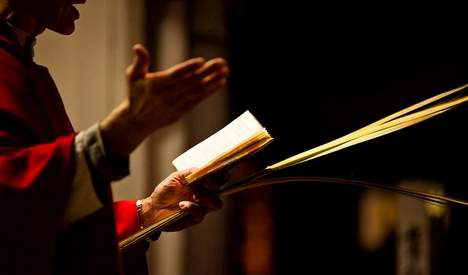
— — — — — — — — — — — — — — — — — — — — — — — — — — — — — — — — — — — —
A cup of cold water [or a decent cup of java!], in the name of the Lord.... |
| Produced by Sgt. Sarah Goss Editor's Note: The following video clip features Chaplain Heatley's Chaplain Assistant. |
| RETURN TO TOP | |||||||||||||||||||||||||||||||||
CSC Chaplain Honored at Buffalo Soldiers 11th Annual 2011 Gala | |||||||||||||||||||||||||||||||||
| Friday, February 18, 2011 Editor's Note: Chaplain (CPT) Sharon Brown is a CSC Chaplain | |||||||||||||||||||||||||||||||||
Chaplain Sharon Brown On February 18th the Buffalo Soldiers National Museum honored the ministry of Chaplains of the U.S. Armed Forces at its annual Gala. The Gala's theme was "Honoring Our Military Chaplains." Coalition of Spirit-filled Churches chaplain, Captain Sharon Brown, was one of three honorees at the Gala event. Chaplain Brown is currently serving as the Battalion Chaplain for the 15th Brigade Support Battalion, 2nd Brigade Combat Team, 1st Cavalry Division at Ft. Hood, TX. For more information on the gala please download the Gala PDF here. For more information on Chaplain Brown, please visit her bio at http://wisemancompany.com/BSMbio.html and scroll down to the "honorees" section.
| |||||||||||||||||||||||||||||||||